
Rugby Strength and Conditioning: The Complete Guide for Players
Strength & Conditioning · 2 November 2026 · 11 min read
 With Phil Healey · S&C Coach
Starting at USD$0.82 USD$0.49/day when billed annually. Save 40%.


Your fitness should intimidate as much as your skillset.
The conditioning stack
Every session type, on tap.
On the field
 Pitch Fitness26 sessions · 12 to 48 min
 Hill Fitness11 sessions · 18 to 38 min
 Speed & Sprint12 sessions · 17 to 36 min
 Running6 sessions · 15 to 35 min
Off your feet
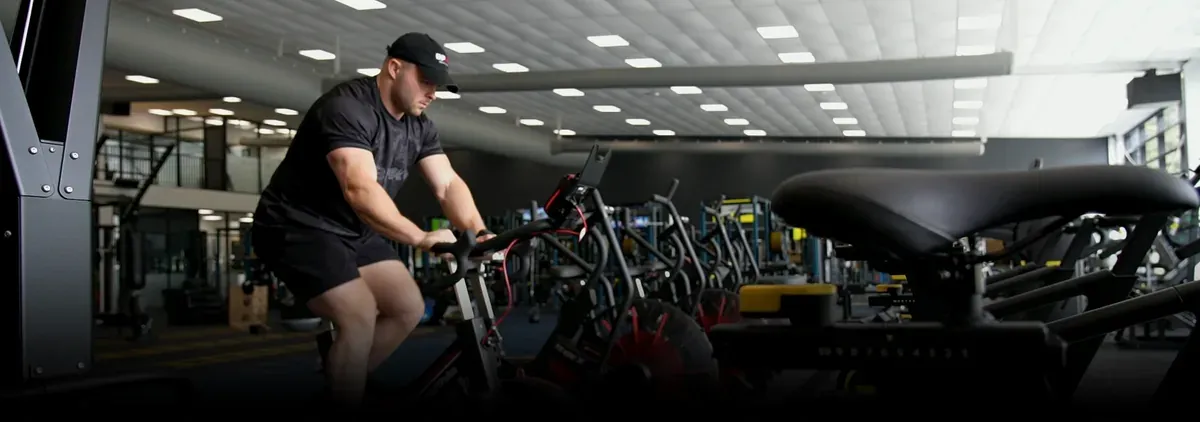 Bike16 sessions · 12 to 40 min
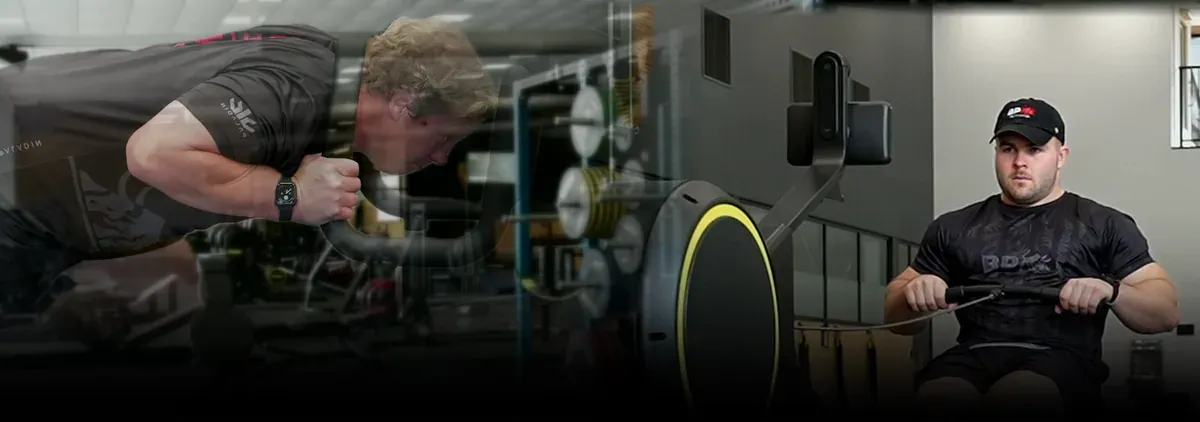 Rower24 sessions · 12 to 54 min
Rugby strength and conditioning, or S&C, builds five things a player needs: strength, power, speed, an engine for 80 minutes, and the durability to stay available for selection. The gym is one part of it, sprinting and conditioning are the others, and recovery is where the adaptation happens.
This guide explains each of the five, how S&C changes through the season and by position, the tests that tell you where you stand, and a typical week. Each part links to the guide that goes deeper.
Made with Phil Healey, Elite Rugby App's head of programming. His record: Counties Manukau 2003-2008, Chiefs 2008-2017, Glasgow Warriors 2017-2018, Blues, Kobe Steelers, New Zealand head of performance from 2026.
What is strength and conditioning in rugby?
Strength and conditioning is two of the five things that compete for a rugby training week, as the rugby training programme sets them out:
- Strength is the gym: strength and power, two to three sessions a week.
- Conditioning is the engine, and the speed work that must be run fresh rather than tacked onto the end of a session.
The two are planned together. A player who is strong enough for the collisions spends less of their engine surviving them, and conditioning on a speed day trains you to be slow. Good S&C decides which of them gives way on each day, and in each part of the season.
Built for your position.
Answer a few questions and see the programs for your position, then train them in the app.
Read the full guide
What are the five parts of rugby strength and conditioning?
Every rugby S&C program trains the same five qualities. What changes between the phases of the season is how much of each.
Strength
Strength is the most force you can produce, with no clock running. It is the platform power, speed and contact all sit on top of. A rugby player trains four movements every week (a push, a pull, a hinge and a carry), plus the squat and neck and trunk work.
The lifts, sets and reps, with full gym weeks for the off-season and the season, are in the rugby gym program.
Power
Power is the ability to produce a lot of force in very little time: the first step off the line, the hit in the tackle, the drive in the scrum and the jump at the lineout. It is built on top of strength, with jumps, throws and Olympic lifts or simpler swaps, done in low reps with full rest.
Rugby power training has the moves, the doses for each phase and four power tests.
Speed
Most sprints in rugby are short, so most races are won or lost before top speed. Acceleration and top-speed sprinting are trained fresh, early in a session, with full recovery. A few quality metres beats a hundred tired ones.
The drills, technique and doses are in rugby speed training. Where the speed day sits in your week is in the rugby training programme, and the two sprint tests are below.
The engine
The engine has two parts: the aerobic base (how fast you recover between efforts) and repeat-effort ability (how well you keep producing high-intensity efforts). Build the base first, then spend the year training repeat efforts on top of it, with drills that look like rugby: short efforts, incomplete rest and decisions under fatigue.
The sessions are in rugby fitness drills, and the free Bronco test timer tells you whether they are working.
Durability
Durability is what keeps you available for selection. Neck and trunk work sits underneath the gym, every single week: it is not optional in a collision sport. Nordic hamstring curls are the insurance policy, because the hamstring is where a fast player’s season ends. And sleep is treated like training.
The neck exercises, in three levels, are in rugby neck exercises, and the four-week rugby workout plan puts neck and trunk work into every week.



How does rugby S&C change through the season?
S&C follows the rugby year. The off-season protects nothing, so it builds. Pre-season protects round one, so it converts strength into power and brings contact back. In season, the week protects Saturday, so it maintains. The volumes move; the movements do not.
| Phase | When it runs | Sessions a week | Focus |
|---|---|---|---|
| Off-SeasonAbout 8 weeks | North: May to JuneSouth: November to January | 4 gym, 2 conditioning | Build strength and size. There is no match to protect, so build. |
| Pre-Season6 to 12 weeks, 8 is common | North: July to AugustSouth: February to March | 3 gym, 3 conditioning | Turn strength into power, running into repeat-sprint work, and reintroduce contact. |
| In-SeasonAs long as your season runs | North: September to AprilSouth: April to July | 2 gym, 1 conditioning, 2 team | Hold what you built and arrive fresh on Saturday. Maintain, do not chase. |
| Active RestAbout 4 weeks | North: MaySouth: August to October | 1 gym, 1 easy aerobic | Tempo work and aerobic base. Rebuild without losing what you built. |
How each quality moves through the year:
- Strength is built in the off-season on four gym days. In season, two gym sessions hold it, and in a two-match week one heavy day does.
- Power is the main event of pre-season. In season, one or two short sessions a week keep it.
- Speed gets a day of its own in the off-season. In season it is short acceleration work on the heavy leg day and a few fast strides at the team run.
- The engine’s base is built in the off-season, with two conditioning sessions a week. In season, most conditioning is already inside rugby training: one conditioned game per pitch session, plus one short repeat-sprint block early in the week.
- Durability work, neck and trunk, happens every week, in every phase.
Pre-season has a guide of its own: rugby pre-season training lays out the eight-week build, shorter six and four-week versions, your first week back and a free PDF.
How does rugby S&C change by position?
Every position pushes, pulls, hinges and carries. S&C changes by position in emphasis, not in structure. Elite Rugby App programs six position groups, and the table shows what each group’s program leans into and what it spends less of the week on.
| Position group | The program leans into | Spends less on |
|---|---|---|
| Front RowShirts 1, 2, 3 | Scrum power and neck strength, loosehead / tighthead position-specific lifts, and an off-season hypertrophy block. | Max-velocity sprint volume. |
| LocksShirts 4, 5 | Maul drive and lifting strength, lineout aerial conditioning, and a pre-season volume block. | Repeated change-of-direction work. |
| FlankersShirts 6, 7, 8 | Breakdown power and repeat efforts, tackle-collision conditioning, and open / blindside / No. 8 splits. | Single heavy efforts with long rests. |
| HalfbacksShirts 9, 10 | Acceleration and change-of-direction, kicking-leg conditioning, and decision-making under fatigue. | Upper-body mass for its own sake. |
| Inside BacksShirts 12, 13 | Collision strength and fend work, hand-off and ball-carry conditioning, and 12 / 13 position-specific splits. | Long, slow aerobic volume. |
| Outside BacksShirts 11, 14, 15 | Top-end speed and sprint mechanics, aerial-contest conditioning, and evasive footwork power. | Grinding high-rep lifting. |
The players on our team, by group:
- Front Row: James Slipper, first capped by Australia in 2010; Zander Fagerson, first capped by Scotland in 2016.
- Flankers: Kieran Read, 127 caps for New Zealand, 2008-2019; Peter Lakai, first capped by New Zealand in 2024; Du'Plessis Kirifi, first capped by New Zealand in 2025.
- Halfbacks: Faf de Klerk, first capped by South Africa in 2016; John Cooney, first capped by Ireland in 2017; Ruben Love, first capped by New Zealand in 2024.
Not sure which group you belong in? Find the position your body suits, then take its row above.
How do you test strength and conditioning for rugby?
Test in your first week of pre-season and again in the pre-competition week, so you finish pre-season with numbers rather than a feeling. The Bronco is worth running three or four times a year: the start and end of pre-season, then once or twice in season. The power tests can be repeated every four to six weeks. Retest the same way each time: the same field, the same boots, the same time of day and the same person on the stopwatch.
Run the least tiring tests first:
- Jumps.
- Sprints: the 10 m, then the 40 m.
- Strength: the squat, the bench press and chin-ups.
- The Bronco, on a day of its own.
| Test | What it tells you | How to run it | What good looks like |
|---|---|---|---|
| Jump | Leg power: a countermovement jump for height, or a broad jump for distance | Best of three, measured with a jump mat or a phone app, or to the back heel for a broad jump | Higher or further than your last test, with a quiet landing. |
| 10 m sprint | Acceleration, your first few steps | From a standing start, best of three, walking back between runs | Quicker than your last test. Hand timing is rough over a short sprint, so only trust a change that shows up on every run. |
| 40 m sprint | Top speed | The same start, best of two, walking back between runs | Quicker than your last test, with the same person on the stopwatch. |
| Squat, bench press, chin-ups | Lower-body, pushing and pulling strength | Work up to a heavy set of five, stopping with a rep or two left in you. Chin-ups: as many clean reps as you can from a dead hang | A heavier set of five than last time, with every rep looking the same. A beginner writes down what they lifted for 3 × 10 instead. |
| Bronco | Your engine, and how well you repeat hard runs | 1,200 m of 20, 40 and 60 m shuttles, five rounds, no rest, on a day of its own | Super Rugby averages: backs 4:57, forwards 5:21 (men); backs 5:52, forwards 6:38 (women). For you, under your last time. |
Time your Bronco with the free Bronco test timer: it gives you your 15 shuttle splits and published Super Rugby times to compare with. For more on the jumps and the 10 m sprint, see rugby power training.
What does a typical rugby S&C week look like?
An in-season rugby week is built backwards from the match: heavy early, fast late, and nothing punishing inside 48 hours of kick-off. This is the in-season week from the rugby training programme, around a Saturday match, with the reason each day sits where it does.
| Day | Session | Why it sits here |
|---|---|---|
| Monday | Lower-body max strength, then short acceleration work | Farthest from the match, so the legs recover. |
| Tuesday | Main pitch session: skills and defence while fresh, conditioned game at the end | In season, most conditioning is already inside rugby training: one conditioned game per pitch session. |
| Wednesday | Upper-body strength, neck and trunk. Low leg load | Mid-week stays light on the legs. |
| Thursday | Team run: structure, lineouts, strike plays, plus a few fast strides | Fast, not heavy: heavy legs on Thursday or Friday, and you will feel it at kick-off. |
| Friday | Rest, or a ten-minute primer of light power work | Nothing slow and exhausting within 48 hours of kick-off. |
| Saturday | Match | The frame every other day fits inside. |
| Sunday | Off feet: walk, pool, sleep | Sleep, food and doing nothing. The adaptation happens here. |
An off-season week is four gym sessions, two conditioning sessions, one dedicated speed day and at least two full rest days. To print a week built around your own fixtures, position and days, use the free rugby training programme builder. For a ready-made program with every session written out for your position, the four-week rugby workout plan comes with a free PDF. And for the same week as a professional runs it, read how pro rugby players train.
Made with Phil Healey
Phil HealeyRugby union strength and conditioning coachPhil Healey is a New Zealand rugby union strength and conditioning coach whose record runs from Counties Manukau and the Chiefs to Glasgow Warriors, the Blues and the Kobe Steelers. Phil is Elite Rugby App's head of programming.
- Counties Manukau 2003-2008
- Chiefs 2008-2017
- Glasgow Warriors 2017-2018
- Blues
- Kobe Steelers
- New Zealand head of performance from 2026
Frequently asked questions
What is strength and conditioning in rugby?
Strength and conditioning in rugby is the gym and conditioning side of a player's training, planned around the match and the season. It builds five things: strength, power, speed, the engine and durability. The gym covers strength and power; conditioning covers the engine and the speed work that must be run fresh.
How often should rugby players do S&C?
Rugby players should do S&C every week of the year, and how much depends on the season. In season it is two gym sessions plus the team's trainings around the match. In the off-season it is four gym sessions and two conditioning sessions, with at least two full rest days. Active rest keeps one of each.
What are the key parts of rugby S&C?
The key parts of rugby S&C are strength, power, speed, the engine and durability. Strength is the platform the others sit on, power is strength used quickly, speed is trained fresh, the engine is an aerobic base plus repeat efforts, and durability is neck, trunk and hamstring work plus the sleep that keeps you available.
What does a rugby S&C coach do?
A rugby S&C coach plans the physical side of a team's training. Loads and volumes are set by the phase of the season, every position trains a different emphasis, and fitness is tested, not guessed. At Elite Rugby App that coach is Phil Healey, our head of programming, and the gym programs are built with him.
Is there a rugby S&C program online?
There are rugby S&C programs online, free and paid. On this site, the four-week rugby workout plan and the eight-week pre-season program are free with printable PDFs, and the plan builder writes a week for your position. Elite Rugby App's gym programs, built with Phil Healey for six position groups, cover the whole season inside the app.
Can I do S&C without a gym?
You can do S&C without a gym for a while. Bodyweight strength, hill or shuttle running, jumps, bounds and throwing a heavy ball against a wall all build a player, and the sprinting stays in. What home training lacks is heavy lifting, so treat it as a bridge to a gym block, not a replacement for one.
Train it, don’t just read it
Every session in this guide is built, periodised and coached inside Elite Rugby App, from the strength staff behind international and Super Rugby teams.
Weighing it up? Read how Elite Rugby App compares with other rugby training apps.