Neck Strength for Rugby: Exercises in Three Levels
Strength & Conditioning · 2 November 2026 · 8 min read
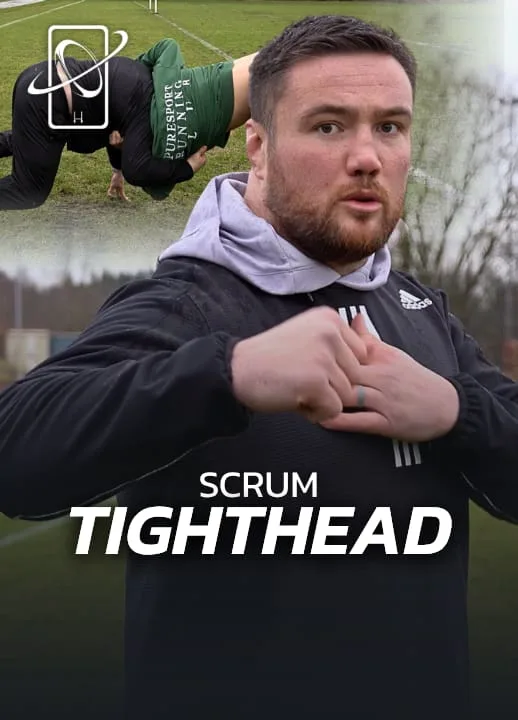
 With Petrus du Plessis · Scrum Coach
Starting at USD$0.82 USD$0.49/day when billed annually. Save 40%.
Your fitness should intimidate as much as your skillset.
The conditioning stack
Every session type, on tap.
On the field
 Pitch Fitness26 sessions · 12 to 48 min
 Hill Fitness11 sessions · 18 to 38 min
 Speed & Sprint12 sessions · 17 to 36 min
 Running6 sessions · 15 to 35 min
Off your feet
 Bike16 sessions · 12 to 40 min
 Rower24 sessions · 12 to 54 min
Rugby neck exercises train the neck that takes the load at every tackle, clearout and scrum. Start with holds against your own hand, add a band once the holds are easy, and work all four directions, front, back and both sides, in two or three short sessions a week. Below are ten exercises in three levels with the sets and holds our own gym programs use, and Petrus du Plessis’s two-day harness plan in his own words.
Why does neck strength matter in rugby?
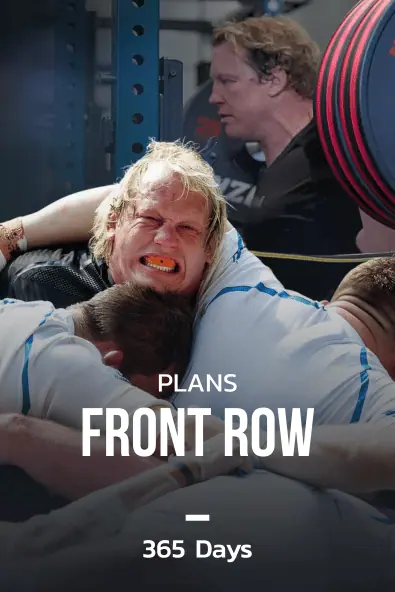
The neck is loaded at every engagement, every clearout and every tackle. Petrus du Plessis puts the aim simply: late in the game, or at your 15th scrum of the day, your neck is not tired and you can stay strong.
Front rowers need the most of it, which is why the prop guide puts neck work in every week and our rugby workout plan tells the front row to add direct neck work. Every position tackles and gets tackled, though, and the same plan has neck and trunk work in every single week.
Neck strength is often talked about alongside concussion. This guide makes no promise there. Train your neck for the contact it takes, learn to tackle well, and if you have, or might have, a concussion, stop training and playing that day, get assessed, and return only once a doctor has cleared you. Our health and safety page sets out the whole of it.
Built for your position.
Answer a few questions and see the programs for your position, then train them in the app.
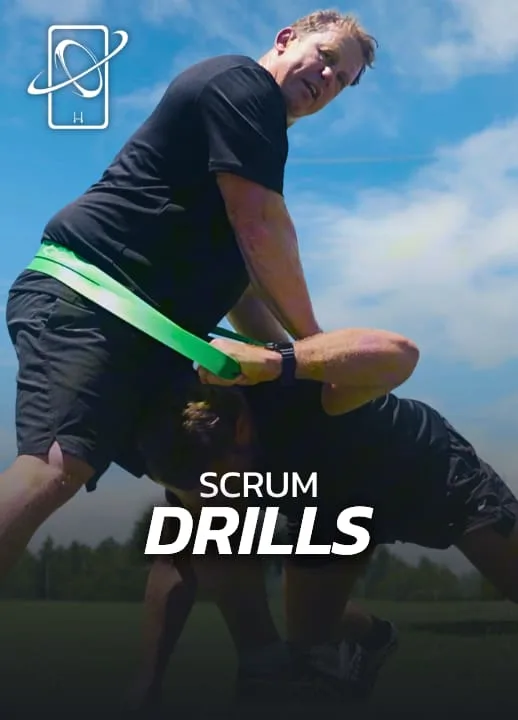
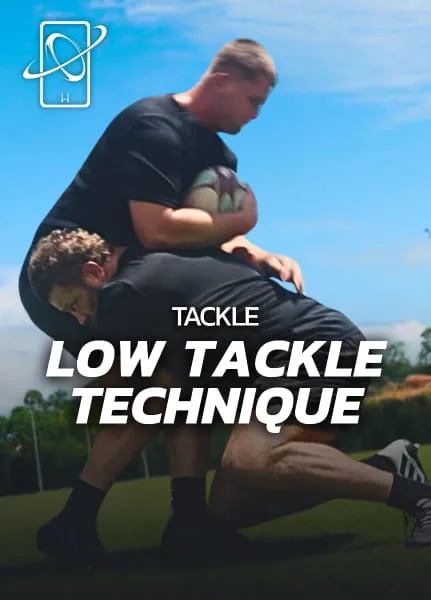
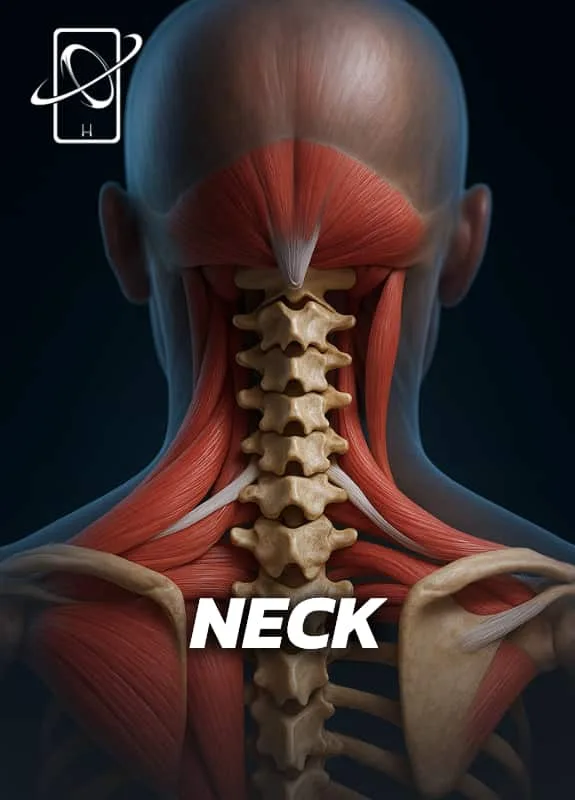
Read the full guide
Rugby neck exercises in three levels
Every exercise here keeps your head still, or turns it slowly, against a pull. The sets and holds are the ones the gym programs in Elite Rugby App use most for each exercise. Move up a level once the holds at your level are easy, and never take a set to failure.
Level 1: hold still, against your hand, then a band
Start with holds against your own hand, and add a band once the holds are easy. Work all four directions, front, back and both sides, and add time before you add resistance.
Hand holds, with no kit at all. Put a hand on your forehead and push your head into it while the hand stops it moving. Then the back of your head, then each side. It is the same hold a band gives you, with nothing to buy. When these are easy, move to the band.
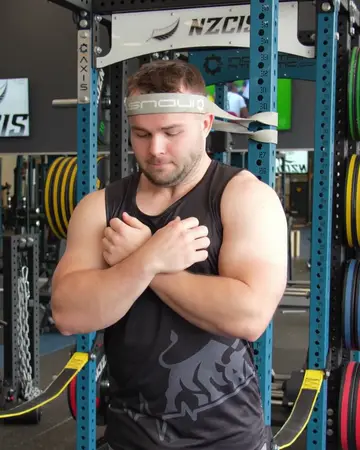
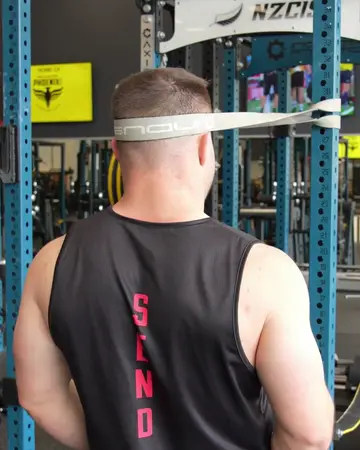
Band front hold
3 × 10-20 s · Band and a post
Band round your forehead, tied to a post behind you at the height of your eyes. Step away until it pulls, then hold your head still.
- Chin slightly tucked.
- Chest big.
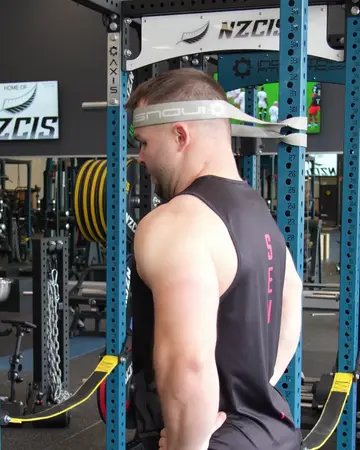
Band back hold
3 × 8-14 s · Band and a post
Face the post with the band round the back of your head. Step back until it pulls, then hold your head still.
- Do not let your head drop forward.
- Chest big.
Band side hold
2 × 15-20 s each side · Band and a post
Stand side on to the post with the band round the side of your head. Step away until it pulls and hold, then turn round for the other side.
- Feet wide.
- Neck neutral, not tipped towards the band.
Level 2: hold still while your body works
The same band holds, now with your shoulders or your hands moving: shrugs with a kettlebell in each hand, and crawls on all fours.
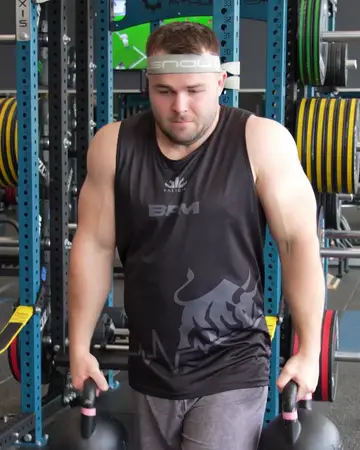
Band front hold with shrugs
3 × 6-12 s · Band, post, two kettlebells
Set up the band front hold with a kettlebell in each hand, then shrug the bells up and down while your head stays where it is.
- The shoulders move, the head does not.
- Chest big.
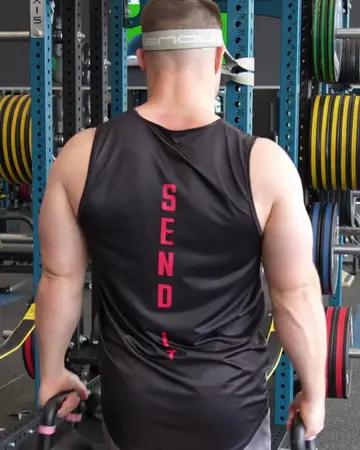
Band back hold with shrugs
3 × 6-12 s · Band, post, two kettlebells
The same shrugs, facing the post with the band round the back of your head.
- The shoulders move, the head does not.
- Eyes level, never looking up.
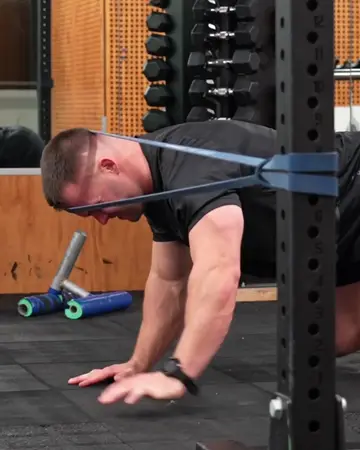
Side crawls
3 × 6-12 s · Band and a post
On all fours with the band round your head, tied to a post at your side. Walk your hands a few small steps away and back while your head stays level.
- Small steps with your hands.
- Your head stays level the whole time.
Level 3: heavier holds, then turns
The bench holds put your own body weight through your neck, so they come once the band work is easy. Turns come last: Petrus du Plessis brings rotations in after six to eight weeks, never heavy.
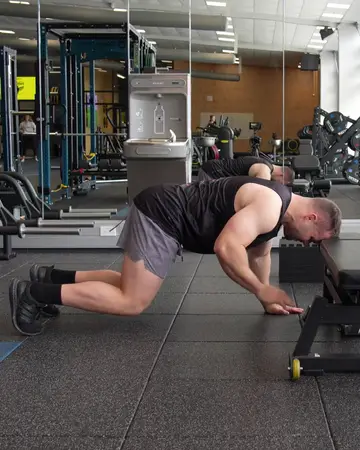
Bench front hold
2 × 15-25 s · A padded bench
Feet on the floor and forehead on the bench pad, with your hands on the floor taking some of your weight. Hold your neck straight and still.
- Neck neutral.
- Never to failure.
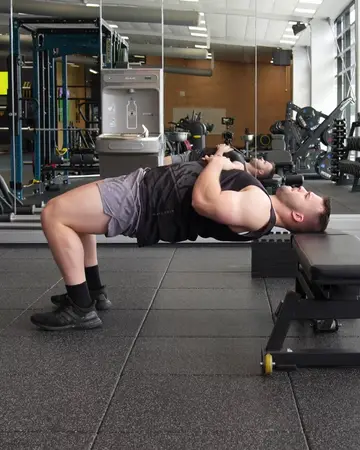
Bench back hold
2 × 15-25 s · A padded bench
Back of your head on the bench pad, feet on the floor, arms crossed on your chest. Lift your hips until your body is straight and hold.
- Chin slightly tucked.
- Never to failure.
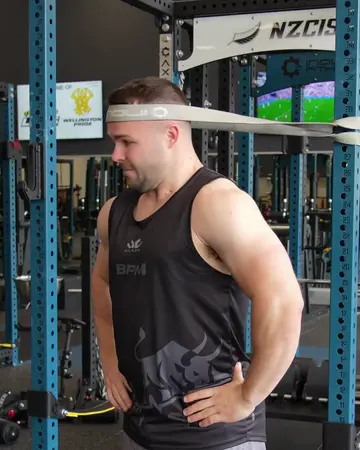
Band head turns
3 × 5-8 turns · A light band and a post
Band round your forehead, tied behind you. Turn your head slowly to look over one shoulder, back to the middle, then the other way.
- Light, never heavy.
- Move your neck, not your shoulders.
The exercises at a glance
The nine exercises with a band or a bench, and the sets and holds to start on. The hand holds that open level 1 have no set time in our programs.
| Exercise | Level | Sets and holds | Equipment |
|---|---|---|---|
| Band front hold | 1 | 3 × 10-20 s | Band and a post |
| Band back hold | 1 | 3 × 8-14 s | Band and a post |
| Band side hold | 1 | 2 × 15-20 s each side | Band and a post |
| Band front hold with shrugs | 2 | 3 × 6-12 s | Band, post, two kettlebells |
| Band back hold with shrugs | 2 | 3 × 6-12 s | Band, post, two kettlebells |
| Side crawls | 2 | 3 × 6-12 s | Band and a post |
| Bench front hold | 3 | 2 × 15-25 s | A padded bench |
| Bench back hold | 3 | 2 × 15-25 s | A padded bench |
| Band head turns | 3 | 3 × 5-8 turns | A light band and a post |
How often should you train your neck?
Two or three short sessions a week. The prop guide puts it well: it should be the most boring five minutes of the session, done three times a week rather than hammered once. Petrus du Plessis trains his twice a week, and fits it into the rest between sets of heavy squats.
- Start on level 1 and add the next level once the holds are easy.
- Add time before you add resistance, and never take a set to failure.
- Leave the turns until you have six to eight weeks of holds behind you, as Petrus du Plessis does.
- Keep it going every week, in season too: our workout plan has neck and trunk work in every single week.
If you have a neck problem or any current injury, see a doctor before you start. Pain is not something to train through: if a movement hurts, stop it, as our health and safety page says.
Petrus du Plessis’s two-day harness plan
Petrus du Plessis trains the neck twice a week with a harness on a cable, and for anyone without a harness he uses a band tied to a post. This is his plan, from his neck lesson in the app.
Day one: strength
- Cable at the height of your eyes, split stance, chest big, chin slightly tucked.
- Each rep is two seconds out, two seconds hold, two seconds back, two seconds rest.
- Six reps in each direction, four sets, heavy enough that the last rep of the last set is hard.
- He adds about one plate a week.
Day two: holding on when tired
- Half the weight of day one.
- Hold for 15 to 20 seconds, building to 30 seconds, three times round.
- The point, in his words: late in the game or at your 15th scrum, your neck is not tired and you can stay strong.
What he watches for
- Head too far forward, or looking up. Keep the neck neutral and the chest big at all costs.
- The shoulders doing the work. If your upper traps help, he adds lateral raises during the hold so the neck works on its own.
- A weak front. His rule of thumb is that the front of the neck is usually about 30% weaker than the back, so bring it up if it lags.
- Turns too soon. Rotations come in after six to eight weeks, never heavy, with the shoulders still.
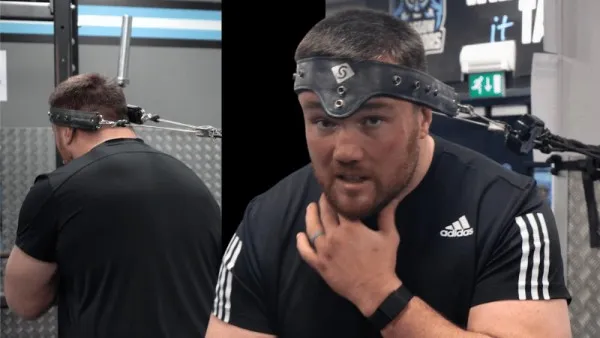
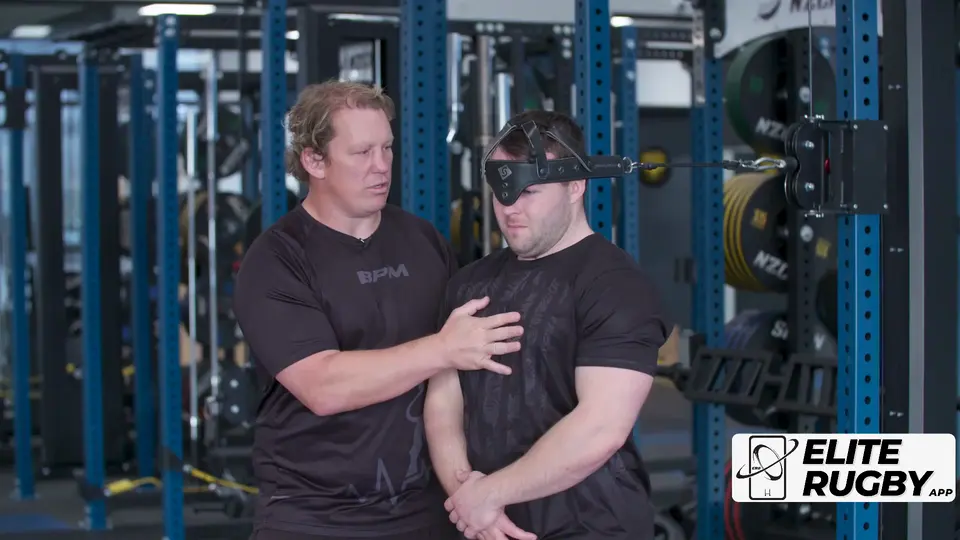
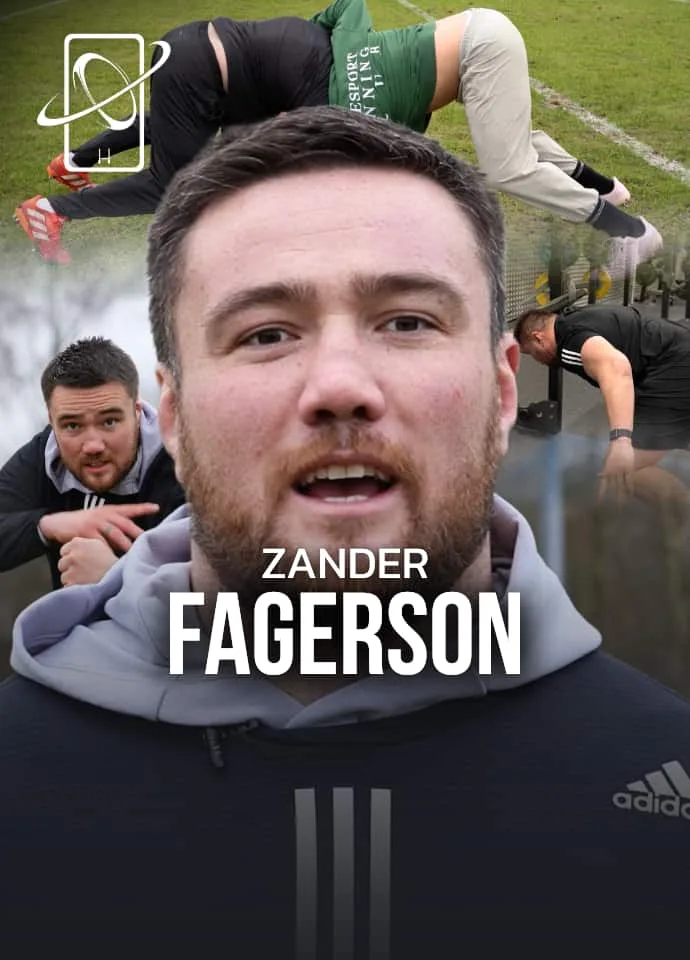
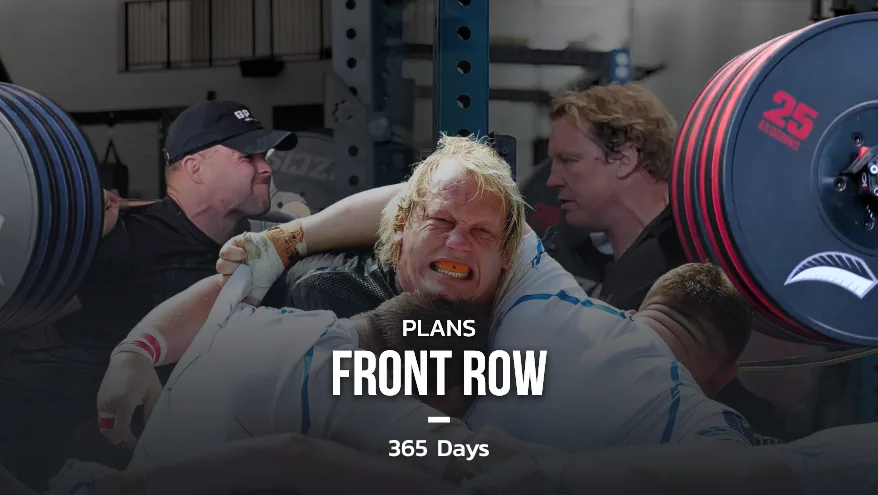
Zander Fagerson (first capped by Scotland in 2016) trains his neck in a harness on a cable too, in his Front Row Neck Strengthening lesson inside the app.
Where to find out more
Inside Elite Rugby App, the Neck Bulletproofing class holds these exercises with Petrus du Plessis’s full neck lesson. On this site, the prop guide covers how the front row trains, the rugby gym program has the lifts that sit around this work, and rugby power training covers the jumps and throws.
Frequently asked questions
How do I strengthen my neck for rugby?
Slowly, in all four directions, front, back and both sides, and every week. Start with holds against your own hand, add band or harness work once the holds are easy, and add time before you add resistance. Keep it short and frequent, and never take it to failure.
How often should rugby players train the neck?
Two or three short sessions a week. Our prop guide calls it the most boring five minutes of the session, done three times a week rather than hammered once. Petrus du Plessis trains his neck twice a week: a heavier harness day of six slow reps in each direction, and a lighter day of 15 to 30-second holds.
Do neck exercises reduce concussion?
This guide makes no promise that neck exercises prevent or reduce concussion. Concussion is a brain injury. If you have, or might have, one, stop training and playing that day, get assessed, and return only once a doctor has cleared you, as our health and safety page sets out.
Neck harness or a machine: which is better for rugby?
Petrus du Plessis trains the neck with a harness on a cable, and for anyone without a harness he uses a band tied to a post. Nothing in this guide needs a neck machine.
Is neck bridging safe?
Our exercise library has no full neck bridge, so this guide does not use one. The nearest are the bench holds, where your neck stays straight and still while your hands or feet take some of your weight. If a movement hurts, stop it, as our health and safety page says.
Train it, don’t just read it
Every session in this guide is built, periodised and coached inside Elite Rugby App, from the strength staff behind international and Super Rugby teams.
Weighing it up? Read how Elite Rugby App compares with other rugby training apps.