





What Does a Prop Do in Rugby Union?
Rugby IQ · 7 September 2026 · 5 min read
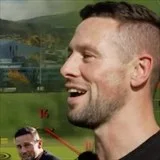
With James Slipper · Prop


The prop wears 1 or 3 in rugby union and holds the scrum still. The loosehead packs on the left of the hooker, the tighthead on the right against two opponents, and both spend the rest of the game hitting rucks, carrying short and lifting in the lineout. The two shirts sit either side of the hooker in the front row — the first three of all fifteen rugby positions.
What are the prop’s four loads?
A prop is picked to absorb four kinds of load, in this order. Call them the Prop’s Four Loads.
- Hold the scrum. Take the hit, hold the shape, and give the pack behind you something worth pushing against.
- Hit the ruck. Arrive, clear, and make the ball fast — the least glamorous half of the job and the larger one.
- Carry short. One-out off 9, over the gain line, ball kept alive on the deck for the next phase.
- Last eighty minutes. A scrum at 78 minutes is scored exactly the same as a scrum at 8.
What physical attributes does a prop need?
Five qualities, and where each one actually lives in a training week.
| Attribute | Why the prop needs it | How it is trained |
|---|---|---|
| Maximum lower-body strength | The scrum is won from the ground up, and the prop is the base of it | Heavy bilateral squat and hinge work, low reps |
| Horizontal pushing power | Scrum force is horizontal, not vertical, and the gym rarely trains it that way | Sled and prowler pushing, horizontal press variations |
| Bracing under load | The bind has to hold a shape while two packs move through it | Loaded carries and anti-rotation trunk work |
| Neck and shoulder robustness | The front row takes head and shoulder load in every scrum, and it is the one quality the position cannot skip | Progressive neck work in all four directions, plus upper-back strength |
| Repeat contact capacity | A prop hits more rucks than any back and still has to scrummage at 70 minutes | Contact circuits placed after conditioning, not before |
Frame is the one thing a prop cannot train around: the job wants mass carried low and a trunk that holds a shape under it, which is why the front row sits at the heavy end of every published squad list — the sourced bands are on rugby positions body types.

What is the difference between a loosehead and a tighthead prop?
The loosehead wears 1 and packs on the left of the hooker, with his head on the outside of the scrum and one opponent on his right shoulder. His job is to hold his side of the scrum up and square so the hooker can work, and he is the freer of the two in the loose. That is the shirt James Slipper plays, in a Wallabies career that has taken him past every other Australian for Test caps.
The tighthead wears 3 and packs on the right, with his head between the opposition loosehead and hooker — two opponents, and the load of both packs arriving through one shoulder. It is the harder shirt to fill, the one supply of specialists everybody complains about, and the reason a scrum goes backwards when it goes wrong. Zander Fagerson plays it for Scotland.
Both shirts are prop forwards, and that is the word to reach for when the distinction does not matter — a squad list, a gym block, a conversation about the front row as a unit. Reach for loosehead or tighthead the moment it does, because the two sides of the scrum ask for different things and a prop who has only ever packed on one of them knows it the first time he is asked to swap.
How does a prop train?
A prop trains strength that transfers to a body angle nobody else in the game holds, and conditions so it is still there in the last quarter. Four qualities carry the week.
| Quality | Why the prop needs it | What a session looks like |
|---|---|---|
| Scrum-specific strength | The scrum asks for force held at a body angle nobody stands at anywhere else | Heavy squat and hinge, then the same drive rehearsed against a machine or a live pack |
| Horizontal push | A scrum moves forward, not up, and vertical strength does not transfer on its own | Sled and prowler work, plus pressing patterns loaded along the floor |
| Neck and upper back | Every engagement and every clearout is loaded through the neck and the shoulders | Progressive neck work in all four directions, little and often, never to failure |
| Repeat-contact conditioning | The last scrum of the game is scored the same as the first | Contact circuits placed after the conditioning is already in the legs |
Those four sit inside a plan rather than beside one. The four-week workout plan by position sets out the split, and the per-position workout PDF is the version you can take to the gym. If you would rather it was written for you and progressed week to week, ERA’s gym programs are built per position by the internationals who play them.


How do rugby forwards train neck strength?
Slowly, in all four directions, and every week. The neck is loaded at every engagement, every clearout and every tackle, and it is the one area where the front row cannot borrow a general gym programme and hope. Start with isometric holds against a hand or a wall, add banded or harness work once the holds are easy, and progress the time under tension before the resistance.
Keep it short, keep it frequent and never take it to failure. It should be the most boring five minutes of the session, done three times a week rather than hammered once.
How is the prop different in rugby league?
In rugby league this differs because the scrum is not competed for, so a league prop wears 8 or 10 and is picked as a middle-unit carrier and tackler rather than as a set-piece specialist. League has no loosehead or tighthead at all.
Where to find out more
The front row is half of the tight five, and the other half is next door: second row rugby covers the two shirts that push through you. The hub, rugby positions, covers all fifteen numbers, and rugby positions by body type runs the question the other way, from the frame you have to the shirt it suits. To train it rather than read about it, the gym programs are written per position.
Frequently asked questions
What does a prop forward do in rugby?
A prop forward in rugby union scrummages at 1 or 3, hits rucks, carries short and lifts in the lineout. The scrum is the part nobody else can cover: a side that runs out of props has to play uncontested scrums, which is why a matchday 23 must name six players able to play in the front row.
What numbers are props in rugby?
The prop numbers in rugby union are 1 and 3: 1 is the loosehead and 3 the tighthead, with the hooker at 2 between them. The replacement props normally wear 17 and 18. The number tells you which side of the hooker a player packs down on, and nothing else.
How many props does a rugby team have?
A rugby union team has two props on the field, one loosehead and one tighthead, and normally two more on the bench. A side has to be able to fill both shirts safely for the whole game, which is what forces a team into uncontested scrums when it cannot.
The full replacement rules sit on the hub, in what a matchday 23 means.
What does prop mean in rugby?
Prop in rugby means the two forwards who support — prop up — the hooker on either side in the scrum. The name is literal. The hooker strikes for the ball with a foot off the ground, and the props hold him there while both packs push against the bind.
How big are props in rugby?
Props are the heaviest players in a rugby union side, because the job is to hold a scrum still rather than to run. Mass carried low is the point rather than height, and the published bands are per unit rather than per shirt, since that is how squads record them.
The sourced bands, and where they come from, are in rugby positions by body type.
How do rugby forwards train neck strength?
Rugby forwards train neck strength with progressive resistance in all four directions — flexion, extension and both sides — built up slowly and never loaded to failure. Isometric holds come first, then banded or harness work, kept short, frequent and boring rather than heavy and occasional.


Train it, don’t just read it
Every session in this guide is built, periodised and coached inside Elite Rugby App, from the strength staff behind international and Super Rugby teams.
Start for freeWeighing it up? Read how Elite Rugby App compares with other rugby training apps.