Power in Rugby: How to Train It, Test It and Use It
Strength & Conditioning · 2 November 2026 · 12 min read
 With Phil Healey · S&C Coach
Starting at USD$0.82 USD$0.49/day when billed annually. Save 40%.

Your fitness should intimidate as much as your skillset.
The conditioning stack
Every session type, on tap.
On the field
 Pitch Fitness26 sessions · 12 to 48 min
 Hill Fitness11 sessions · 18 to 38 min
 Speed & Sprint12 sessions · 17 to 36 min
 Running6 sessions · 15 to 35 min
Off your feet
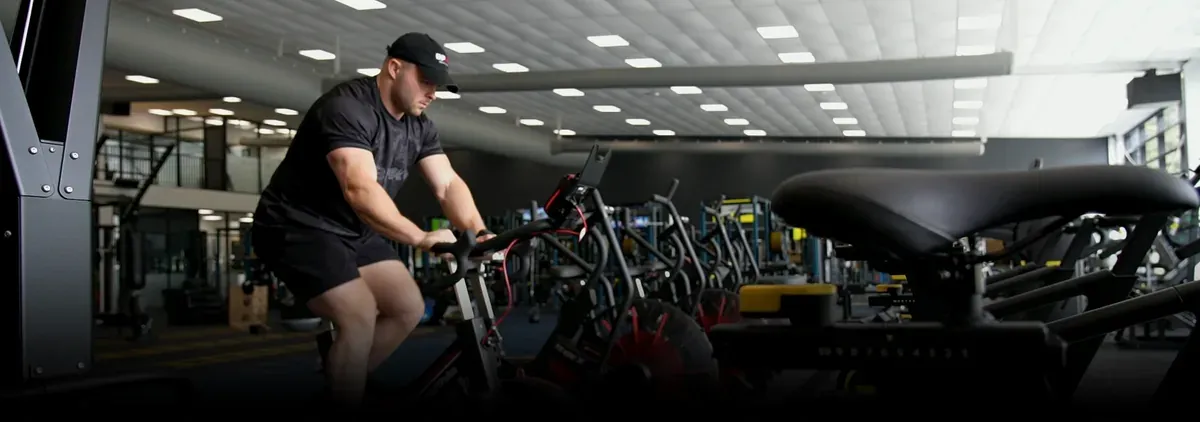 Bike16 sessions · 12 to 40 min
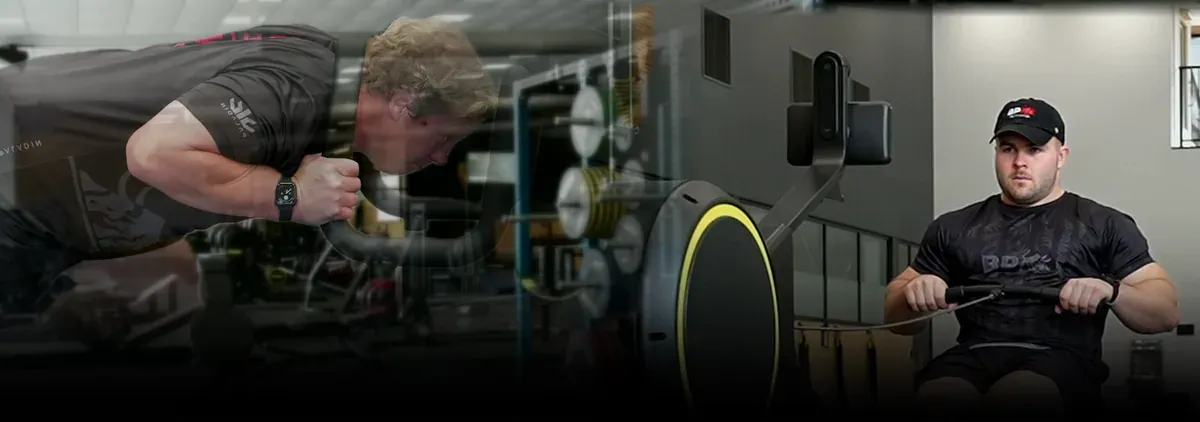 Rower24 sessions · 12 to 54 min
Power in rugby is the ability to produce a lot of force in very little time: the first step off the line, the hit in the tackle, the drive in the scrum and the jump at the lineout. Rugby power training builds it on top of strength, with jumps, throws and Olympic lifts or simpler swaps, done in low reps with full rest. Below are the moves, the sets and reps for each phase of the season, how to test your power, and two workouts to run this week.
What is power in rugby?
Power is force multiplied by velocity: how hard you can push, and how quickly. Coaches call the speed part rate of force development, which is how fast you get from nothing to your full push.
Time is the whole story. A heavy squat shows how strong you are, but it can take a couple of seconds to grind up. A sprinting foot is on the ground for about a tenth of a second, and that is all the time you get to push. In a match you almost never have time to use all of your strength, so the player who wins is the one who gets the most force out in the time the game gives.
The gap is measurable. Jones and colleagues (2019) tested 30 professional and 30 amateur men’s rugby union players. The professionals were better on almost every power measure, and two of them, peak power in a six-second bike sprint and the speed of the jump, were among the few things that predicted who played professionally. World Rugby’s summary of the same study puts the gap at 21% higher jumps and 29.5% more peak power.
Built for your position.
Answer a few questions and see the programs for your position, then train them in the app.
Read the full guide
Where does power show up in a rugby match?
Power shows up wherever the game is decided in a fraction of a second:
- The first three steps. Most sprints in rugby are short, so most races are won or lost before top speed: off the line in defence, onto the ball in attack.
- The tackle. The player who gets their force on first wins the contact, and with it the gain line.
- The carry. Leg drive through contact is power: the half-metre after the hit that turns a stalled carry into a gain.
- The scrum. The engagement is a collision between two packs, and the one that gets its force on first sets the platform.
- The lineout. The jumper’s leap and the lifters’ drive happen in a split second, before the opposition can get up to contest.
- The breakdown. Clearing out and getting over the ball are short, explosive efforts, repeated all game.



Strength or power: which do rugby players need first?
Strength comes first, because power is strength used quickly, and you cannot use force you do not have. A player who is not yet strong gets more powerful just by lifting heavy. A player who is already strong needs dedicated power work to use that strength in the time a game allows.
That is why a rugby year moves from strength to power: build the engine in the off-season, teach it to fire in pre-season, and keep it sharp in season. It is also why week 3 of our four-week rugby workout plan is the POWER week: the weight comes off so the bar can move. The heavy lifts that build the strength underneath are in the rugby gym program.
How do you test power for rugby?
You test power for rugby with four simple tests you can repeat: a jump for height, a jump for distance, a short sprint and a throw. Run them after the same warm-up, on the same surface and at the same time of day, take the best of three, and retest every four to six weeks.
| Test | What it tells you | How to run it |
|---|---|---|
| Countermovement jump | Lower-body power straight up: the lineout jump and the first push off the ground. | Hands on hips, dip and jump as high as you can. Measure with a jump mat or a phone app. Best of three. |
| Standing broad jump | Lower-body power going forward: the drive into contact. | Toes behind a line, swing and jump as far as you can, land on both feet. Measure to the back heel. Best of three. |
| 10 m sprint | Acceleration: power turned into your first steps. | Standing start, timing gates or a phone app, a full walk back between runs. Best of three. |
| Med-ball chest throw | Upper-body power: the fend and the punch through contact. | Sit with your back against a wall and throw from the chest, with the same ball every time. Measure where it lands. Best of three. |
One test day is a snapshot, and a small change can be day-to-day noise, so look for the trend across two or three test days. If your gym has a device that measures bar speed, use it to end each set when the bar slows down. Without one, end the set when you see a rep slow down. These four tests measure power, not fitness; for fitness, time a Bronco with our free Bronco test timer.
What are the best power exercises for rugby?
The best power exercises for rugby come from four families: jumps (coaches call them plyometrics), Olympic lifts or simpler swaps for them, medicine-ball throws, and upper-body power. Pick one or two from each family, keep every set to a few fast reps, rest fully, and stop the set the moment it slows.
| Exercise | Off-season | Pre-season | In-season | Rest |
|---|---|---|---|---|
| Jumps | ||||
| Box jumpThe first step and the lineout jump: the whole leg extending at once, then a soft landing. | 3 × 5 | 4 × 3 | 2 × 3 | 90 s |
| Broad jumpDriving forward off the line and into contact. | 3 × 4 | 4 × 3 | 2 × 3 | 90 s |
| Lateral bound, each sideThe step and the change of direction, one leg at a time. | 3 × 4 | 4 × 3 | 2 × 3 | 60 s |
| Pogo hopStiff, quick ankles for the short ground contacts of sprinting. | 3 × 10 | 3 × 12 | 2 × 10 | 60 s |
| Olympic lifts and simpler swaps | ||||
| Hang power cleanHip drive into the tackle, the carry and the scrum, finished in a strong catch. | 4 × 4 | 5 × 3 | 3 × 3 | 2 to 3 min |
| Push pressLeg drive through the arms: the lineout lift, the fend and the ruck clear-out. | 4 × 5 | 5 × 3 | 3 × 3 | 2 min |
| Trap-bar jumpThe same hip drive as the clean, with almost nothing to learn. | 4 × 4 | 5 × 3 | 3 × 3 | 2 min |
| Kettlebell swingA fast hip snap for tackles and carries, and easy to coach to a whole squad. | 3 × 10 | 4 × 6 | 2 × 6 | 90 s |
| Medicine-ball throws | ||||
| Med-ball chest throwThe fend, the hand-off and the punch through contact. | 3 × 6 | 4 × 4 | 2 × 4 | 60 s |
| Rotational med-ball throw, each sideTurning the hips into a pass, a tackle or a fend. | 3 × 5 | 4 × 4 | 2 × 4 | 60 s |
| Upper-body power | ||||
| Clap push-upPushing a body off you, and getting off the ground and back in the line. | 3 × 6 | 4 × 5 | 2 × 5 | 90 s |
| Landmine punch press, each armThe fend: one arm, driven from the legs, at the angle you actually push at. | 3 × 6 | 4 × 4 | 2 × 4 | 90 s |
Olympic lifts are worth learning if someone can coach you through them. The trap-bar jump and the kettlebell swing give you the same hip drive with almost nothing to learn. Whichever you pick, learn to land before you jump high: land quietly, with your knees over your toes and your hips back, and step down from the box rather than jumping down.
How much power training should you do in each phase of the season?
Power work is short and sharp in every phase. What changes through the season is how much of it there is and where it sits in the week.
| Phase | Power sessions a week | Jumps and throws | A typical set |
|---|---|---|---|
| Off-seasonBuild strength. Keep power ticking over with a short block before the heavy lifts. | 2, of 10 to 15 minutes each | 20 to 40 | 3 × 5 easier jumps and throws, full rest |
| Pre-seasonTurn the new strength into speed. Power is the main event, often paired with a heavy lift. | 2 to 3 | 40 to 60 | 4 to 5 × 3, every rep fast, 2 to 3 minutes rest |
| In-seasonKeep the pop without carrying soreness into the match. | 1 to 2, plus a short primer before the match | 15 to 30 | 2 to 3 × 3, early in the week |
In season, put the bigger power session early in the week, furthest from the match, and keep a short primer of a few jumps and strides for a day or two before kick-off. How the rest of the week fits around it is set out in the rugby training program, and the eight weeks that lead into round one are in rugby pre-season training.
How does power training change by position?
Power training changes by position in emphasis, not in structure: every position jumps, throws and lifts fast, and what moves is where the extra work goes. Elite Rugby App programs six position groups, and the table below shows what each one leans into.
| Position group | Where power shows | Program focus in the app | Moves to lean on |
|---|---|---|---|
| Front RowShirts 1, 2, 3 | The hit on the scrum engagement, the clear-out and the short carry. | Scrum power & neck strength | Trap-bar jump, hang power clean, med-ball chest throw, neck work every week |
| LocksShirts 4, 5 | The lineout jump and lift, the maul drive and the restart contest. | Maul drive & lifting strength; Engine-room power output | Push press, box jump, hang power clean |
| FlankersShirts 6, 7, 8 | Tackle after tackle, the jackal, and carries off the base of the scrum. | Breakdown power & repeat efforts; In-season power maintenance | Back squat into broad jump, kettlebell swing, rotational med-ball throw |
| HalfbacksShirts 9, 10 | The first step off the base, the snipe through a gap and defending the fringes. | Acceleration & change-of-direction | 10 m sprints, lateral bound, pogo hop, rotational med-ball throw |
| Inside BacksShirts 12, 13 | Crash ball, the fend and the big hit in midfield. | Collision strength & fend work | Hang power clean, landmine punch press, med-ball chest throw, broad jump |
| Outside BacksShirts 11, 14, 15 | Acceleration onto the ball, top speed, the step and the aerial contest. | Top-end speed & sprint mechanics; Evasive footwork power | Pogo hop, lateral bound, box jump, 10 m sprints |
Not sure which group you belong in? Find the position your body suits first, then take its row above. The full programs for each group live in the position-specific gym programs inside the app.
Two rugby power workouts to try
These are two single-day workouts built from the menu above, at about its pre-season doses. Run the lower-body workout early in the week and the upper-body one midweek, at least two days apart. In season, cut each one to the in-season sets in the menu.
Workout 1: lower-body power, about 55 minutes
- Warm-up: 10 min. Skips, leg swings, 2 × 10 pogo hops and three build-up runs over 20 m.
- Box jump: 4 × 3, rest 90 s. Jump up, land soft and quiet, then step down. Never jump down.
- Hang power clean, or trap-bar jump: 5 × 3, rest 2 to 3 min. Every rep fast. When the bar slows, the set is over.
- Back squat into broad jump: 3 rounds, rest 3 min between rounds. Three heavy but clean squats, a minute's rest, then three broad jumps while the legs are switched on.
- Lateral bound: 4 × 3 each side, rest 60 s. Stick every landing for a second before the next bound.
- Nordic hamstring curl: 3 × 5. Lower yourself as slowly as you can. The hamstring is where a fast player's season ends.
Workout 2: upper-body power, about 50 minutes
- Warm-up: 8 min. Band pull-aparts, push-ups and light throws against a wall.
- Med-ball chest throw: 4 × 4, rest 60 s. Throw it hard into a wall. Catch, reset, throw again.
- Push press: 5 × 3, rest 2 min. Dip and drive with the legs. The arms only finish the job.
- Rotational med-ball throw: 4 × 4 each side, rest 60 s. Turn from the back foot and the hips, not the arms.
- Weighted chin-up: 4 × 4, rest 2 min. Pulling keeps the shoulders healthy against all that pushing.
- Neck and trunk: 10 min. Every week, in every phase. It is not optional in a collision sport.
Every rep in both workouts should be fast. If you are too tired to move quickly, finish the session there: a slow rep trains you to be slow.
What are the most common power training mistakes?
- Doing it tired. Power work after conditioning, or at the end of a heavy session, becomes more conditioning. Do it first, straight after the warm-up.
- Too many reps. By the eighth jump of a set you are training to be slow. Three to five fast reps, then stop.
- Not resting enough. Thirty seconds between sets of cleans turns a power set into a fitness set. Rest two to three minutes so every rep is quick.
- Chasing the number on the bar. A clean that grinds up is a strength lift with poor technique. Take weight off until it moves fast again.
- Jumping before you can land. Learn to land quietly, knees over toes and hips back, before you add height, distance or a load.
- Dropping it in season. Stop power work in season and your pop fades as the weeks go on. One short session a week keeps it.
Where to find out more
World Rugby publishes a free conditioning course on World Rugby Passport, including its page on power. On this site, the next steps are the four-week rugby workout plan with its free PDF, the lifts, sets and reps behind the strength work and conditioning that looks like the game.
Frequently asked questions
What is power in rugby?
Power in rugby is the ability to produce a lot of force in very little time. It is strength and speed together: force multiplied by velocity. It wins the first step off the line, the hit in the tackle, the drive in the scrum and the jump at the lineout, where there is never time to use all your strength.
Why is power important in rugby?
Power is important in rugby because the moments that decide a game happen in a fraction of a second. A sprinting foot is on the ground for about a tenth of a second, too short to use your full strength. The player who gets the most force out in that time wins the collision, the race and the ball.
How do rugby players get more explosive?
Rugby players get more explosive by getting stronger first, then training to move fast: jumps, throws, Olympic lifts or simpler swaps, and short sprints, done in low reps with full rest so every rep is quick. Two or three short power sessions a week out of season, and one or two in season, is enough.
Should rugby players do Olympic lifts?
Rugby players can do Olympic lifts, and many professional teams use variations such as the hang power clean, but they are not compulsory. They take time to learn and a coach to check them. A trap-bar jump or a kettlebell swing trains the same hip drive with far less to learn, which suits most club players.
How many power sessions a week should a rugby player do in season?
A rugby player should do one or two short power sessions a week in season. Put the bigger one early in the week, furthest from the match, and keep it to 15 to 30 jumps and throws. A short primer of a few jumps and strides a day or two before kick-off keeps you sharp without leaving you sore.
What is the difference between strength and power?
The difference between strength and power is time. Strength is the most force you can produce with no clock running, like a heavy squat that takes two seconds to grind up. Power is how much force you produce quickly, like the drive off the line. Strength sets the ceiling; power training teaches you to use more of it.
Can you train power at home?
You can train power at home with your own body and a little space. Squat jumps, broad jumps, bounds, hill sprints, clap push-ups and throwing a heavy ball against a wall all build it. What home training lacks is heavy lifting, so it keeps power ticking over but will not raise your strength ceiling the way a gym does.
What are the best power exercises for rugby?
The best power exercises for rugby come from four families: jumps such as box jumps and bounds, medicine-ball throws, an Olympic lift or a simpler swap such as the trap-bar jump, and upper-body moves such as the push press. Pick one from each family, keep every set to a few fast reps and rest fully.
How do you test power for rugby?
You test power for rugby with a few simple tests you can repeat: a countermovement jump for height, a standing broad jump for distance, a 10-metre sprint from a standing start and a medicine-ball chest throw. Use the same warm-up each time, take the best of three, and retest every four to six weeks.
Train it, don’t just read it
Every session in this guide is built, periodised and coached inside Elite Rugby App, from the strength staff behind international and Super Rugby teams.
Weighing it up? Read how Elite Rugby App compares with other rugby training apps.