Rugby Speed Training: Drills, Technique and Tests to Get Faster
Strength & Conditioning · 2 November 2026 · 8 min read
 With Phil Healey · S&C Coach
Starting at USD$0.82 USD$0.49/day when billed annually. Save 40%.


Your fitness should intimidate as much as your skillset.
The conditioning stack
Every session type, on tap.
On the field
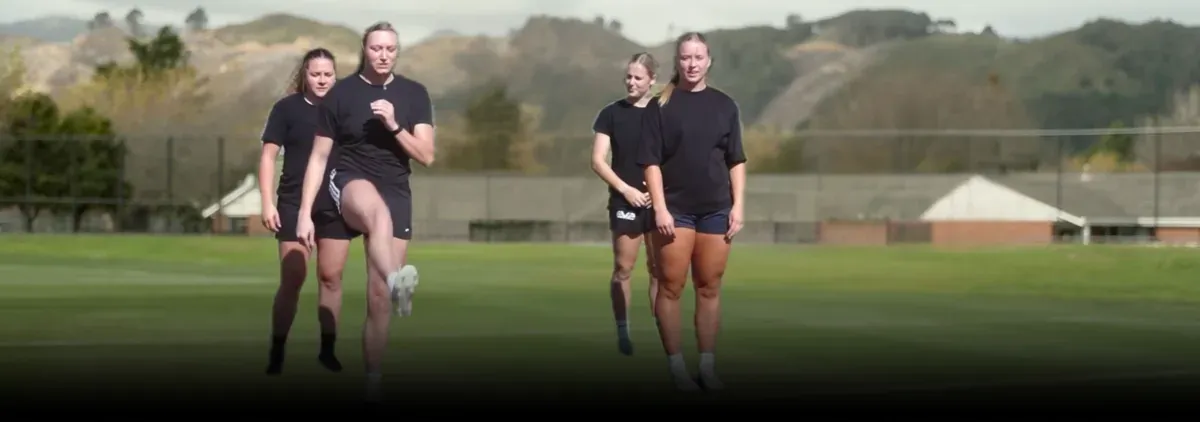 Pitch Fitness26 sessions · 12 to 48 min
 Hill Fitness11 sessions · 18 to 38 min
 Speed & Sprint12 sessions · 17 to 36 min
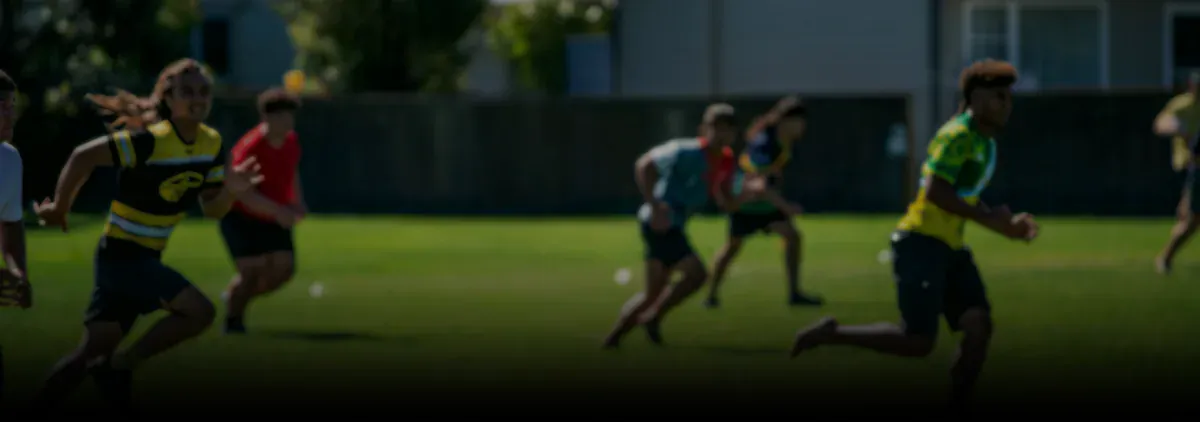 Running6 sessions · 15 to 35 min
Off your feet
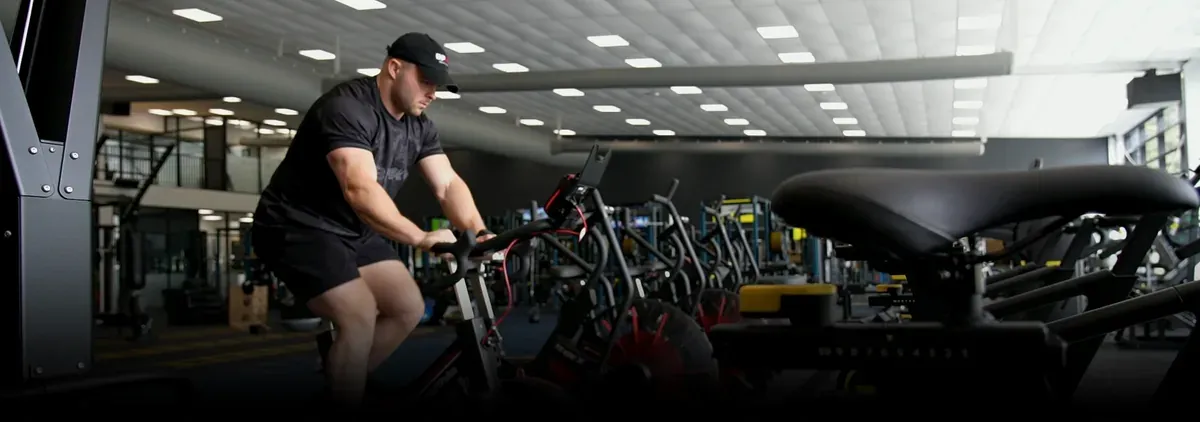 Bike16 sessions · 12 to 40 min
 Rower24 sessions · 12 to 54 min
Rugby speed training makes you faster over the distances the game is played at: most rugby sprints are 10 to 30 metres. It is short sprints run fresh, early in a session, with full recovery, a few drills from Phil Healey’s and Maddison Levi’s lessons in the app, and the strength and power behind them. Below are the drills, speed by position, how much to do in each part of the season and how to test it.
Acceleration or top speed: which does rugby need?
Rugby needs both. Acceleration is your first few steps, which a 10 metre sprint measures. Top speed is what a 40 metre sprint shows. Most rugby sprints are 10 to 30 metres, so most races are won or lost before top speed: off the line in defence, onto the ball in attack.
- Forwards train short accelerations. The front row does the least top-speed running.
- Halves train acceleration and change of direction.
- The back three train top-end speed.
Built for your position.
Answer a few questions and see the programs for your position, then train them in the app.
Read the full guide
What does good sprint technique look like?
A sprinting foot is on the ground for about a tenth of a second, and that is all the time you get to push. Phil Healey’s speed lessons in the app come back to the same few things:
- Stiff ankles. His Strength For Speed Wins lesson is about why ankle stiffness is the key to power and speed, with a bike-tyre analogy for how stiff ankles save energy.
- Use the ground. The same lesson shows how to use the ground to propel you faster.
- Upright posture. His high knees drill trains upright posture and hip activation.
- Flexible hips. Hip flexibility unlocks longer, faster strides, and his Train for Top Speed lesson calls flexibility and stride length the shortcut to more speed.
For the start, Maddison Levi’s banded acceleration drill sets the position: the left leg as the base, the opposite arm forward and the sprint stance loaded. Then drive: the hips punch through and the knee drives up.
The best speed drills for rugby
The best speed drills for rugby are the ones below, from our programs and our coaches’ lessons. Run them fresh, early in a session, with full recovery. A few quality metres beats a hundred tired ones.
Marching and skipping drills
Phil Healey’s Sprint Activation lesson runs them in order: fast feet to switch on the nervous system, high knees for upright posture and hip activation, then low drive skips, high drive skips, A-skips and B-skips. His sprint mechanics lessons add switches, building from single leg switches and single leg pogo skips to a 1, 2, 3 switch, and explain why ankle stiffness matters in the switch drill.
In our power and workout guides these drills sit inside a 10-minute warm-up: skips, leg swings, 2 × 10 pogo hops and three build-up runs over 20 m.
Resisted sprints
Maddison Levi’s banded acceleration drill puts a band around your waist, held by a partner behind you. Set the sprint position, then drive against the band: the hips punch through and the knee drives up, for fast acceleration mechanics.
Sprints from a standing start
The speed day in our four-week rugby workout plan is sprints from a standing start: 6 × 30 m with a walk back, then 8 × 30 m in the next block. Backs swap the plan’s 40/20 repeats for six 30 m sprints from a standing start with a walk back, because their job is speed into space.
Flying sprints
Flying sprints start from a rolling 20 m run-up, so the part that counts is all top speed. The power block of the workout plan runs 6 × 40 m flying for top-end speed. Build up to full speed first: Phil Healey’s warm-up lesson takes sprint build-ups through 75%, 85% and 95% before kick-off.
Reactive starts
Maddison Levi’s reaction speed drill puts two players at the poles. Both sprint to a middle cone: one chooses late, and the other follows fast. On “ready, set, go”, move quick on the call.
| Drill | What it trains | Distance | Sets and rest |
|---|---|---|---|
| Marching and skipping drills | Fast feet to switch on the nervous system; high knees for upright posture and hip activation | Not set | Inside a 10-minute warm-up |
| Resisted sprints | Fast acceleration mechanics: the hips punch through and the knee drives up | Not set | Not set |
| Sprints from a standing start | Acceleration, your first few steps | 30 m | 6 × 30 m with a walk back, then 8 × 30 m |
| Flying sprints | Top speed: the part after a rolling 20 m run-up | 40 m | 6 × 40 m flying, full recovery |
| Reactive starts | Moving quick on the call, or on another player's choice | To a middle cone | Not set |
Strength and power for speed
Strength comes first, because power is strength used quickly, and you cannot use force you do not have. Our gym program calls the back squat the most direct transfer to sprint power. Phil Healey’s Train for Top Speed lesson puts relative strength and a powerful posterior chain behind winning races, with a squat of twice your body weight as the strength standard to chase.
For the halves and outside backs, speed is the product and the gym serves it: force at speed (jumps, hip thrusts, lighter faster lifts) and hamstring work every week. The Nordic hamstring curl, 3 × 5, is the one accessory nobody who sprints should skip, because the hamstring is where a fast player’s season ends.
Pogo hops train stiff, quick ankles for the short ground contacts of sprinting: 3 × 10 in the off-season, 3 × 12 in pre-season and 2 × 10 in season, with 60 seconds’ rest. The jumps, throws and fast lifts are in rugby power training, and the heavy lifts underneath them are in the rugby gym program.
Speed training by position
Every position sprints. What changes is the kind of speed work, and the table shows it for each of the six position groups Elite Rugby App programs, as our guides and plans already set it out.
| Position group | Speed work |
|---|---|
| Front RowShirts 1, 2, 3 | Short accelerations. The front row does the least top-speed running, and its program dials down max-velocity sprint volume. |
| LocksShirts 4, 5 | Short accelerations. |
| FlankersShirts 6, 7, 8 | Short accelerations, with breakdown power and repeat efforts. |
| HalfbacksShirts 9, 10 | Acceleration and change of direction, with 10 m sprints and pogo hops among the power moves. |
| Inside BacksShirts 12, 13 | Speed into space: six 30 m sprints from a standing start, with a walk back. |
| Outside BacksShirts 11, 14, 15 | Top-end speed and sprint mechanics: flying sprints off a rolling start on the speed day, and longer 60 to 80 m efforts at near-max speed with fuller recovery. |
Not sure which group you belong in? Find the position your body suits first, then take its row above.
How much speed training, in and out of season?
Put the sprinting before the fatigue, not after it, in every part of the season, because tired sprinting trains you to be slow. What changes through the year is how often you sprint and what kind of sprints they are.
| Phase | Speed work |
|---|---|
| Off-season | One dedicated speed day: speed while you are fresh, then a small-sided conditioning game with the ball. |
| Pre-season, weeks 1 to 3 (general prep) | Two speed sessions a week: short sprints run fresh, beside tempo runs. |
| Pre-season, weeks 4 to 6 (specific prep) | Two speed sessions a week: 30 m sprints run fresh, beside repeat sprints with short rests. |
| Pre-season, week 7 (pre-competition) | Flying sprints and short, sharp conditioning. |
| Pre-season, week 8 (taper and trial) | Sprint primers: three or four short, sharp runs to wake the legs up before a game. |
| In-season | No separate day: short acceleration work after Monday's heavy lift, and a few fast strides at Thursday's team run. |
In the six-week pre-season, that is 6 × 20 m sprints run fresh in weeks 1 and 2, then 6 × 30 m in week 3 and 8 × 30 m in week 4. In a week with two matches, speed is a 15-minute primer of light power and a few strides, and nothing that leaves soreness. The whole week around it is in the rugby training programme, and the weeks before round one are in rugby pre-season training.
How to test your speed over 10 and 40 metres
You test speed with a 10 m sprint for acceleration and a 40 m sprint for top speed, timed with gates or a phone app, and taken fresh.
| Test | What it tells you | How to run it |
|---|---|---|
| 10 m sprint | Acceleration, your first few steps | From a standing start, best of three, walking back between runs |
| 40 m sprint | Top speed | The same start, best of two, walking back between runs |
Retest the same way: the same field, the same boots, the same time of day and the same person on the stopwatch, every four to six weeks. Hand timing is rough over a short sprint, so only trust a change that shows up on every run. The workout plan’s last week does exactly this: 4 × 30 m, timed over the same distance as week 1. For fitness rather than speed, time a Bronco with our free Bronco test timer.
Made with Phil Healey
Phil HealeyRugby union strength and conditioning coachPhil Healey is a New Zealand rugby union strength and conditioning coach whose record runs from Counties Manukau and the Chiefs to Glasgow Warriors, the Blues and the Kobe Steelers. Phil is Elite Rugby App's head of programming.
- Counties Manukau 2003-2008
- Chiefs 2008-2017
- Glasgow Warriors 2017-2018
- Blues
- Kobe Steelers
- New Zealand head of performance from 2026
Frequently asked questions
How do I get faster for rugby?
You get faster for rugby by sprinting fresh, early in a session, with full recovery, and by building the strength and power behind your sprint. Short sprints go in from week one of a pre-season. Put speed before anything tiring, because tired sprinting trains you to be slow, and lift heavy so you have force to use quickly.
How long does it take to get faster?
How long it takes to get faster is something to measure, not guess. Our four-week workout plan times the same sprint in week 4 that you ran in week 1, and our pre-season program tests in week 1 and again in week 7. Hand timing is rough over a short sprint, so only trust a change that shows up on every run.
What are the best speed drills for rugby?
The best speed drills for rugby in our programs are sprints from a standing start, flying sprints off a rolling 20 metre run-up, Phil Healey's skips and switches, and Maddison Levi's banded acceleration and reaction drills. Run them fresh, early in a session, with full recovery: a few quality metres beats a hundred tired ones.
Does lifting make you faster?
Lifting helps you get faster, because power is strength used quickly and you cannot use force you do not have. Our gym program calls the back squat the most direct transfer to sprint power, and Phil Healey's Train for Top Speed lesson puts relative strength and a powerful posterior chain behind winning races. It never replaces sprinting fresh.
How often should I sprint in-season?
In season, our training week keeps speed short and inside other sessions: short acceleration work after Monday's heavy lift, and a few fast strides at Thursday's team run. In a week with two matches it becomes a 15-minute primer of light power and a few strides the day before the midweek game, and nothing that leaves soreness.
Train it, don’t just read it
Every session in this guide is built, periodised and coached inside Elite Rugby App, from the strength staff behind international and Super Rugby teams.
Weighing it up? Read how Elite Rugby App compares with other rugby training apps.