Fullback Rugby Position: What Does the 15 Do?
Rugby IQ · 3 November 2026 · 6 min read
Starting at USD$0.82 USD$0.49/day when billed annually. Save 40%.
Built for your position.
Answer a few questions and see the programs for your position, then train them in the app.
Fullback, rugby union’s number 15, stands behind the whole back line. Fullbacks field the other side’s long kicks, run or kick them back, sweep up in defence as the last line, and join the attack at pace to make the extra player. See where the 15 sits among all fifteen rugby positions.
What are the fullback’s four jobs?
The rugby fullback has the most open field of anyone, and the work reduces to four jobs.
- Field the kick. Catch the opposition’s deep kicks, often with chasers arriving.
- Counter-attack. Gain the ground back by running the ball or kicking it back.
- Sweep. Tackle the attacker who has broken through, when there is nobody else left.
- Join the line. Come into the back line at pace in attack to create an overlap.


Read the full guide
What skills and attributes does a fullback need?
Positioning comes first, because being in the right place stops the dangerous kick before it happens. Here is where each quality lives in a training week.
| Attribute | Why the fullback needs it | How it is trained |
|---|---|---|
| Positioning | Being in the right place stops dangerous kicks and turns line breaks into tackles, not tries | Back-field drills with the wings, reading where the kicker is looking |
| A safe high-ball catch | The fullback fields the opposition's deep kicks, often under a chase | Catching from height under pressure, then landing and setting off |
| Counter-attack and kicking | After the catch the fullback gains ground by running it back or kicking it back | Catch-and-decide drills: run, pass or kick in the same rep |
| Last-line tackling | The fullback stops the attacker who has broken through when nobody else can | One-on-one tackle technique in open space, arrived at at speed |
How does the fullback work with the wings?
The fullback and the two wings, 11 and 14, are the back three, and between them they have to cover the whole field. In defence, when the fullback goes up for a kick, one wing drops into the back field and the other stays in the line, and the three swap those jobs as the ball moves. The wing’s side of it is in rugby winger.
In attack the same three look for the space. Good positioning from the fullback turns a broken defence into a try-scoring chance, because an extra player arriving at pace is the overlap a defence cannot cover.
How does a fullback train?
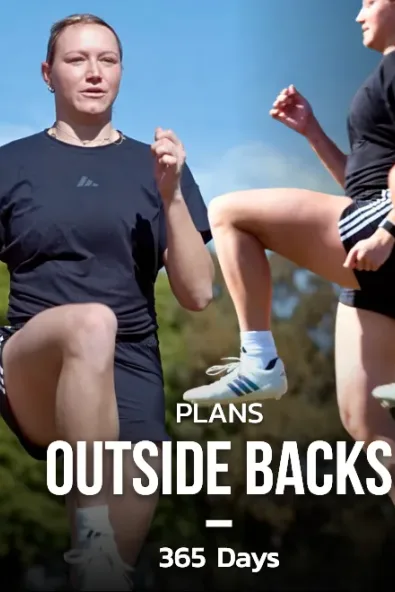
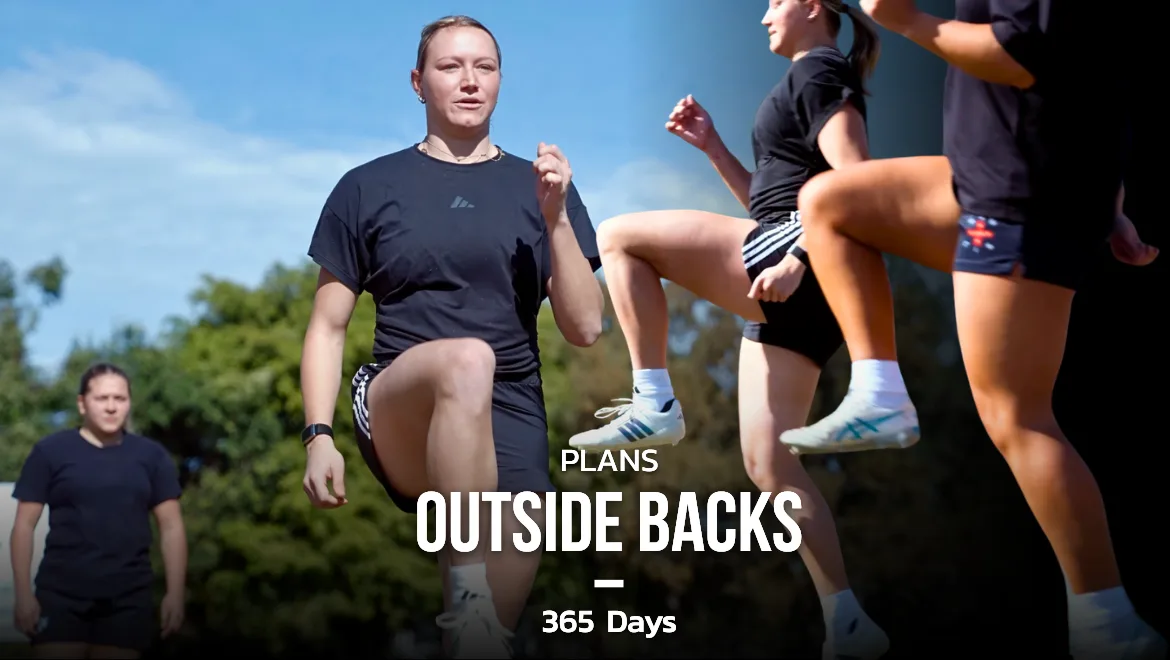
A fullback trains the catch and the decision after it, and trains the body like the other outside backs. Four qualities carry the week.
| Quality | Why the fullback needs it | What a session looks like |
|---|---|---|
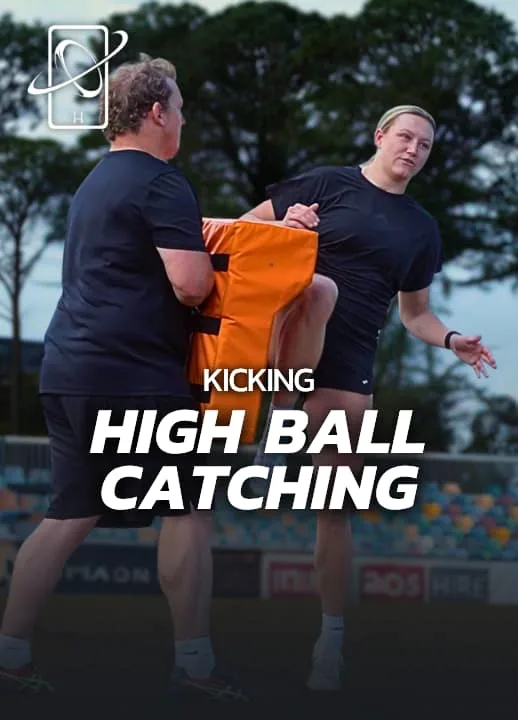
| High-ball catching | It is the fullback's first job every time the other side kicks long | Catching kicks from height, fresh and tired, with a chaser |
| Sprint power | Joining the line at pace is how the fullback makes the overlap | Hip thrust, 4 sets of 5, the outside backs' main lift in our gym program |
| Hamstring strength | Outside backs sprint the most, and our program asks for it every week | Hamstring work every week, such as the Nordic curl, 3 sets of 5 |
| Back-three communication | The fullback and the wings cover the whole field together | Kick-cover drills where the three swap jobs as the ball moves |
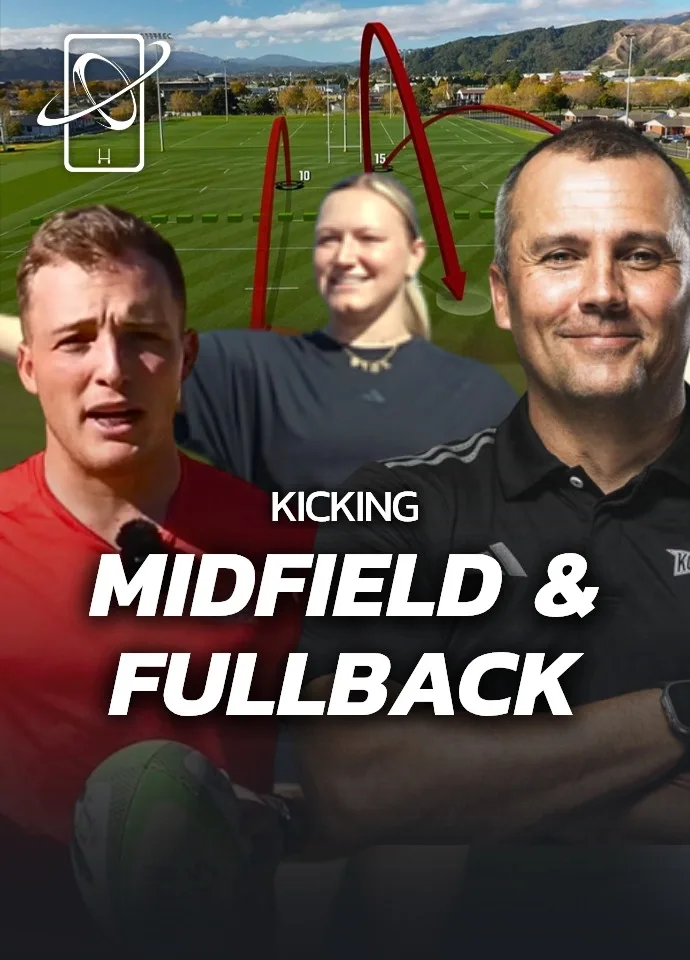
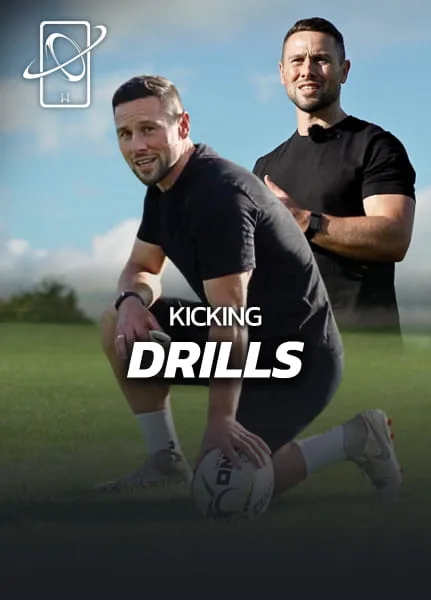
High-ball catching is one of the kicking modules in Rugby IQ, and the kicks a fullback returns are explained in rugby kicking. Ruben Love, whose title on the ERA roster is “Professional rugby union player (First five-eighth / Fullback)”, plays both shirts for New Zealand, the Hurricanes and Wellington. For the gym, the free training plan builder writes an outside backs week for you.
Where to find out more
The fullback shares the back field with the rugby winger, and Ruben Love also plays fly half. The whole fifteen are in rugby positions, and rugby positions by body type runs it the other way, from the frame you have to the shirt it suits. To train the shirt rather than read about it, ERA’s gym programs are built position by position.
Frequently asked questions
What number is full back in rugby?
The full back wears number 15 in rugby union, the last shirt in the team and the player who stands deepest. Together with the two wings, 11 and 14, the 15 makes up the back three, the group that covers kicks and finishes moves.
What does a fullback do in rugby union?
A fullback in rugby union lines up behind the whole back line, fields the opposition's long kicks and gains ground by running or kicking them back. In defence the fullback is the sweeper who tackles anyone who breaks through. In attack the fullback joins the line at pace to make an overlap.
What is full back in rugby?
Full back in rugby is the number 15 position, the deepest player on the field, also called the custodian. The full back is a back, part of the back three with the two wings, and is the last line of defence when an attacker breaks through.
What makes a good fullback rugby?
A good fullback in rugby is always in the right place, catches the high ball safely under pressure, and makes good decisions straight after the catch. Add brave last-line tackling and the pace to join the attack, and you have the full set the shirt asks for.
How to play fullback position in rugby?
To play the fullback position in rugby, stand deep enough to cover the kick, talk to your wings all the time, and catch everything that comes your way. When your side has the ball, pick your moment to join the line at pace, and when you defend, close the gaps nobody else can.
Train it, don’t just read it
Every session in this guide is built, periodised and coached inside Elite Rugby App, from the strength staff behind international and Super Rugby teams.
Weighing it up? Read how Elite Rugby App compares with other rugby training apps.