
Rugby Positions Explained: All 15, By the Pros Who Play Them
Rugby IQ · 7 July 2026 · 11 min read
Rugby union has fifteen positions, numbered 1 to 15, and unlike most sports the number on your back tells everyone exactly what your job is. Numbers 1 to 8 are the forwards: the scrummagers, lineout jumpers and collision workers. Numbers 9 to 15 are the backs: the organisers, distributors and finishers. This guide explains every position, what the role really does, the body type and skills it demands, and how the elite in each position train, drawing on the international players who coach inside Elite Rugby App.
The forwards (1 to 8)
1 & 3. Loosehead and tighthead prop
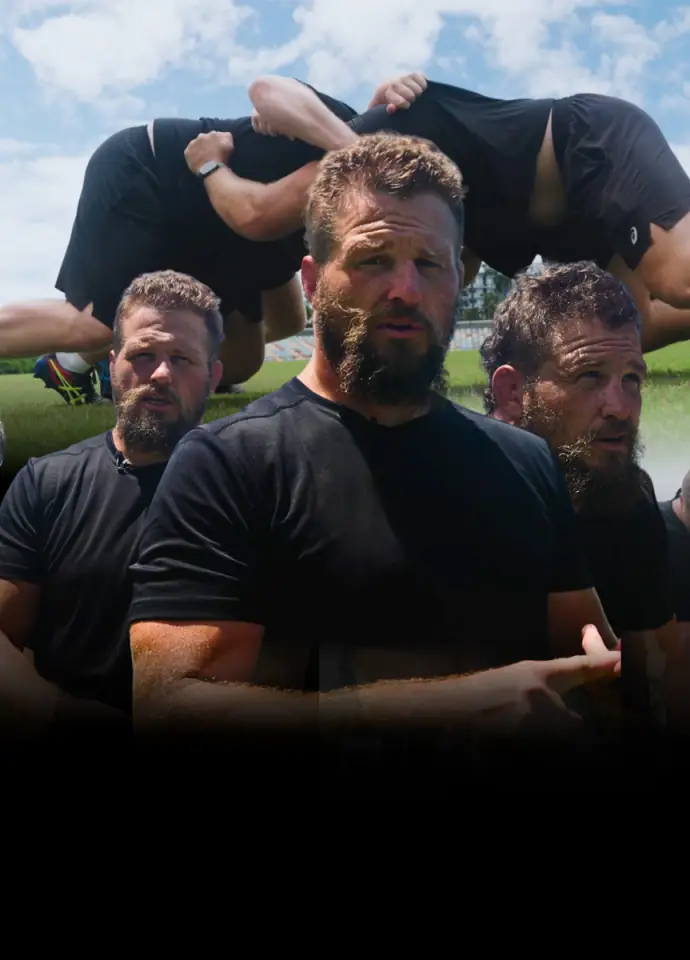
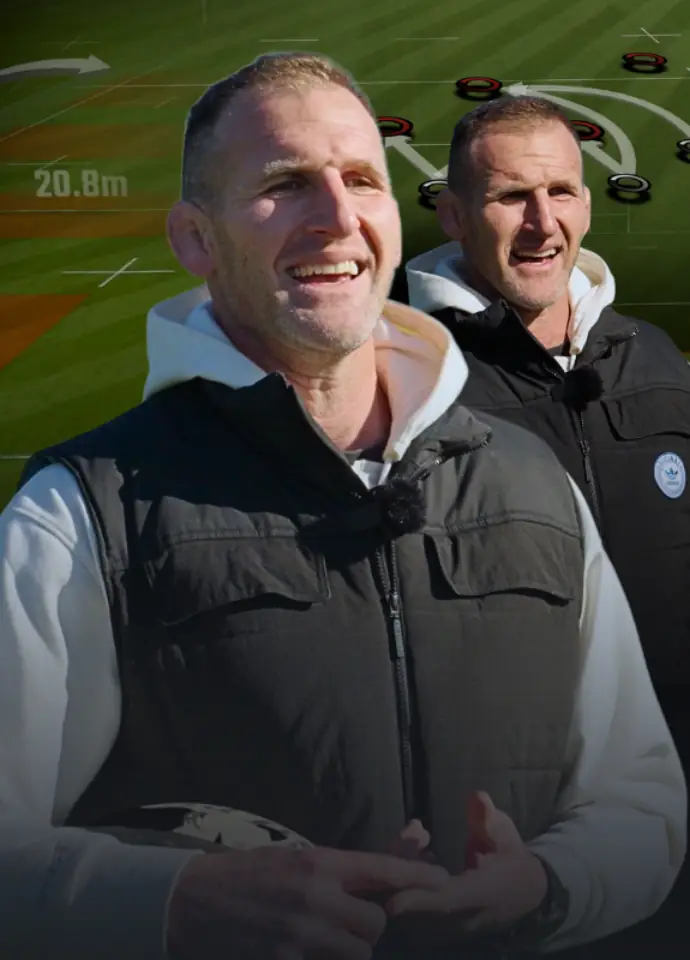
The strongest people on the pitch and the foundation of the scrum. The loosehead (1) scrummages with his head outside the opposition hooker; the tighthead (3) anchors the whole scrum and is usually the hardest position to fill in world rugby. Around the set piece, props carry into heavy traffic, clean rucks and lift in the lineout. Body type: maximal strength over everything, think James Slipper (151 Wallabies caps) or Zander Fagerson (126kg of Scotland tighthead), both of whom coach scrummaging detail inside the app alongside scrum coach Petrus du Plessis.
2. Hooker
Named for hooking the ball back in the scrum, but the modern hooker’s defining skill is the lineout throw, the most pressure-loaded skill in the forwards. Around the field they play like a fourth back-rower: carrying, tackling, competing at the breakdown.
4 & 5. Locks (second row)
The tallest players on the pitch. Locks are the primary lineout targets, the engine of the scrum’s push, the kick-off receivers, and the maul’s spine. Undersized locks survive on timing and work rate; elite ones add a fearsome carry and a huge tackle count.
6 & 7. Blindside and openside flanker
The collision specialists. The blindside (6) is typically the bigger defensive enforcer; the openside (7) lives at the breakdown, first to every tackle, hunting the jackal turnover. Flankers need the widest fitness profile in the forwards: prop-adjacent strength with a back’s engine, the profile a player like Du’Plessis Kirifi (All Blacks flanker) trains for year-round.
8. Number 8
The only forward allowed to pick the ball from the base of the scrum, and usually the team’s premier ball carrier. The number 8 links forwards and backs: carrying off the scrum base, controlling the back of the maul, covering the fullback’s kicks. The modern template is Kieran Read, 127 All Blacks caps of carrying, offloading and aerial skill, whose masterclass sits inside the app alongside rising No 8 Peter Lakai.
The backs (9 to 15)
9. Scrum-half
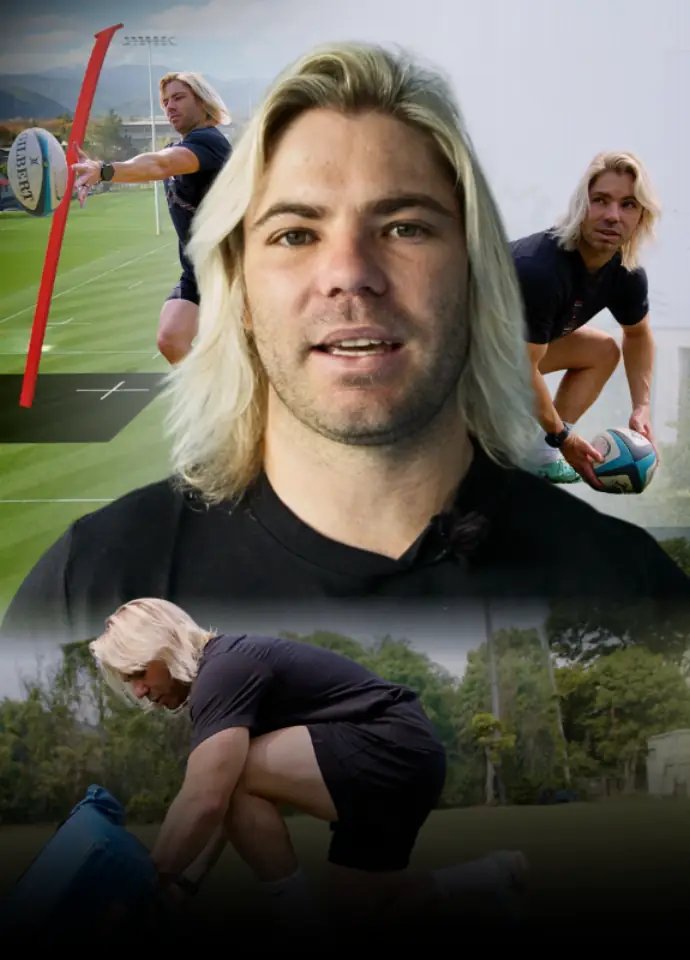
The link between forwards and backs and the loudest voice on the pitch. The nine passes from every ruck, box-kicks for territory, organises the forwards, and makes more decisions per game than anyone. Passing accuracy off both hands is non-negotiable. Inside the app the position is taught by World Cup winner Faf de Klerk and Ireland’s John Cooney.
10. Fly-half
The game’s quarterback. The ten runs the attack: choosing when to pass, kick or strike, managing territory, and usually goal-kicking (our kicking guide covers the craft, and the free goal-kick tracker measures it). Composure under rush defence defines the elite. App masterclasses come from Ruben Love (All Black) and Kade Wolhuter.
12 & 13. Inside and outside centre
The midfield. The twelve is typically the crash-ball carrier and second distributor, a physical presence who straightens the attack; the thirteen is the defensive organiser of the outside channels and the line-breaker with the footwork. The 12/13 defensive partnership is the most communication-heavy in the game.
11 & 14. Wings
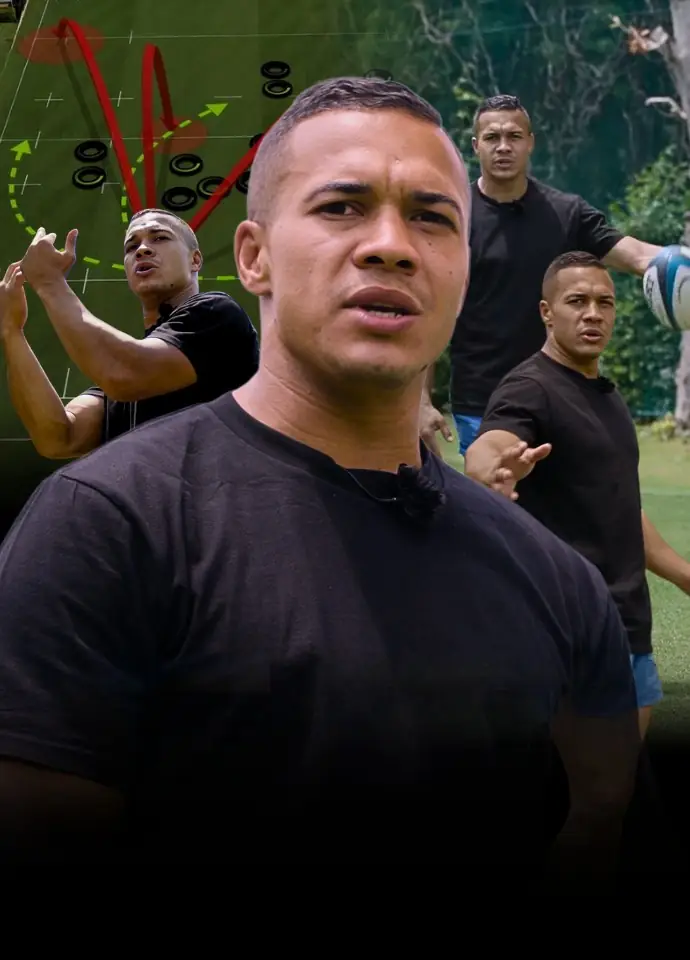
The finishers, and in the modern game, aerial athletes and extra playmakers. Wings score the tries, chase and contest every kick, and field the opposition’s exits. Pace is the entry ticket; positioning and the high-ball are what separate good from great. The app’s wing detail comes from World Cup winner Cheslin Kolbe, the best evader of his generation, and Olympic champion Maddison Levi, the most prolific try scorer in world sevens.
15. Fullback
The last line of defence and the first line of counter-attack. The fullback fields the bombs, organises the back-three’s kick coverage, joins the line as a second playmaker and punishes loose kicks with broken-field running, the game Will Jordan (All Blacks) has turned into an art form.
Which position should you play?
- Love contact and the set piece? Front five (1 to 5).
- High engine, love the tackle and the turnover? Back row (6 to 8).
- Organiser, talker, quick hands? Halfback pair (9 and 10).
- Physical but skilful, love defence? Midfield (12 and 13).
- Fast, brave under the high ball? Back three (11, 14, 15).
At junior level, rotate: the best senior players almost all played multiple positions growing up (see how to coach rugby union).
Train for YOUR position, not a generic template
The whole point of understanding positions is that they train differently: a prop’s gym week looks nothing like a winger’s (see the position-specific gym program guide and how the pros train). Inside Elite Rugby App, every gym program and skill pathway is built per position by the internationals above, and the custom rugby experience quiz builds your plan from your position in two minutes.
Train it, don’t just read it
Every session in this guide is built, periodised and coached inside Elite Rugby App, from the strength staff behind international and Super Rugby teams.
Start for free